
The Lord Roars From Zion
Published on: 7.7.2026The Return of the True Prophetic Voice
By: Dr. Jürgen Bühler, ICEJ President
Joel was one of the first Hebrew prophets to proclaim “The Day of the Lord”. The exact time of his prophecy remains unclear, as he never tied his message to the reign of a certain king.
The book of Joel focuses on the coming “Day of the Lord”. The Apostle Paul wrote that the Day of the Lord will come as a “thief in the night” (1 Thessalonians 5:2); totally unpredictable, like thieves who come unannounced when you least expect it. According to the Apostle Peter, the heavens will dissolve, and the earth will burn (2 Peter 3:10). It is the great day of reckoning for humanity, or as Isaiah said: “… it is the day of the Lord’s vengeance. The year of recompense for the cause of Zion.” (Isaiah 34:8).
The prophet Zephaniah further described it: “The great day of the Lord is near… a day of wrath is that day, a day of distress and anguish, of ruin and devastation…” (Zephaniah 1:14-15)
As Joel saw this day coming upon the world, he first called the entire nation together for fasting, prayer and repentance, because “who knows whether He will not turn and relent and leave a blessing behind…” (Joel 2:14). Joel sensed an emergency and called on the people to gather and weep “between the porch and the altar”. Some commentators believe he saw the Babylonian conquest centuries beforehand.
Yet, like many biblical prophets, his vision also extended into the distant future. “And it shall come to pass afterward…” Joel saw a two-fold vision for the last days.
First, he saw great revival coming. “And it shall come to pass afterward that I will pour out My Spirit on all flesh; Your sons and your daughters shall prophesy, your old men shall dream dreams, your young men shall see visions. And also on My menservants and on My maidservants I will pour out My Spirit in those days.” (Joel 2:28-29) It would be a time of great awakening and refreshing.
Many prophets, like Isaiah, Ezekiel, and Zechariah, saw a similar end-time revival for Israel. Preaching centuries later in Jerusalem, Peter saw “times of refreshing” awaiting his people (Acts 3:19). This all means before the great and awesome Day of the Lord, we can expect an outpouring of the Holy Spirit, centered in Israel.
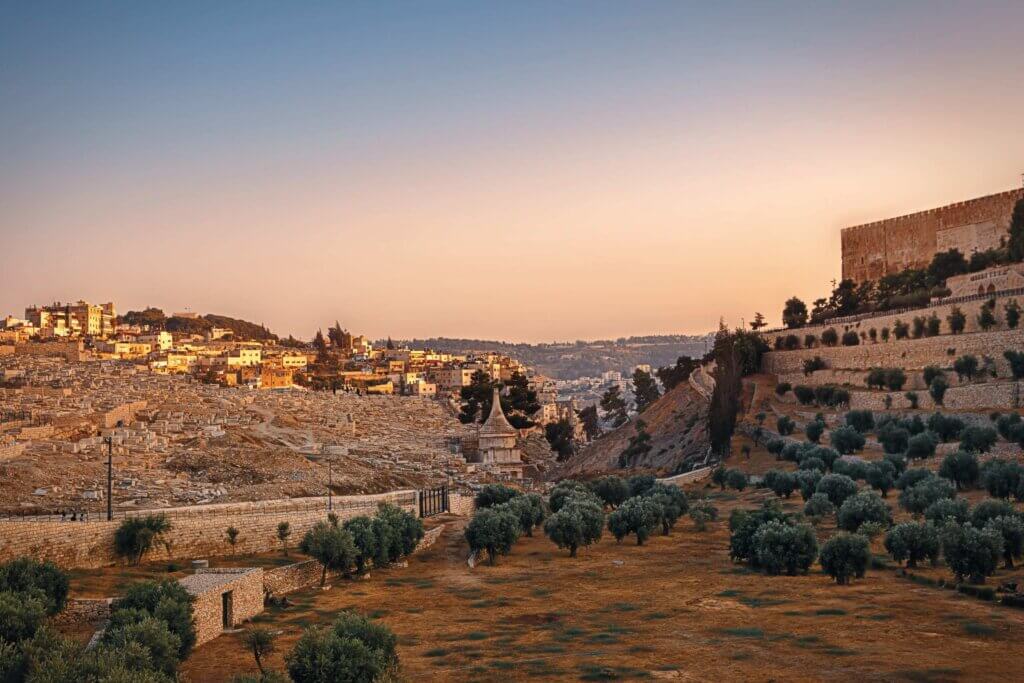
Second, Joel saw a less encouraging vision. He saw the Valley of Jehoshaphat, meaning “the Lord judges”. This is part of the Kidron Valley east of Jerusalem. It represents God’s judgment of the nations, as other prophets also envisioned. While there is an opportunity for “all flesh” to be filled with the Holy Spirit and call on the name of the Lord, God also is positioning the nations for judgment, based mainly on how they have treated Israel.
So, the prophet Joel saw both revival and judgment, for Israel and the nations. This is not just Joel’s vision, but of almost every prophet in the Bible as well. This strikes me, because today most modern-day prophetic voices speak only about revival, church growth, health and prosperity. Joel saw this too, yet he also warned his people and the nations about the great and dreadful Day of the Lord.

Indeed, I am struck that the Church has largely failed to foresee the great global shakings of the past decade: the Covid pandemic, a major war in Ukraine, and of course October 7. After the horrible terror invasion of Israel, we at the ICEJ asked ourselves why no one really saw it coming. In a way, Israel’s security failure is a striking parallel to the Church; we were all caught by utter surprise.
Amos declares: “Surely the Lord God does nothing, unless He reveals His secret to His servants the prophets.” (Amos 3:7) Yet we hear regularly, “this year will be your best year” or “a new season of prosperity is coming”. Over the past 50 years, I have heard so many times that revival is coming to Germany, and you likely have heard the same about your country. Very few voices, like the Bible teacher David Pawson, foresaw events such as the radical Islamisation of his country, the United Kingdom, already 25 years ago.
Prophets who proclaim only good times are not a new phenomenon. It is as old as the people of God. Jeremiah and Ezekiel chided the prophets of their time who foresaw only peace and well-being and failed to see the judgment of God coming (Ezekiel 12:24).
Why this one-sided stream of prophecy? Mostly because it satisfies the desires of our own hearts. Who does not want growth and prosperity? Meanwhile, we struggle with harsh words of correction and judgment.
The prophet Habakkuk faced exactly this dilemma. He wrestled with the challenging times Israel was facing, and cried out to God: “How long?” Yet God did not answer as he might expect, saying: “Don’t worry. Great times are ahead.” Instead, God told him: “You think it is bad now? This is just the beginning. I will send the Chaldeans to judge Israel.”
God even introduced His word this way: “Look among the nations and watch – Be utterly astounded! For I will work a work in your days which you would not believe, though it were told you.” (Habakkuk 1:5)
Would we, too, have struggled to believe if the Lord had announced a global pandemic in 2020, that churches would be shut down worldwide, and big ministries would collapse? Not even Israeli security officials heeded the warning signs that came in the days, and even hours, before the horrific invasion from Gaza.
You might be tempted to think the office of a New Testament prophet is more filled with words of grace and encouragement. But a close look at the New Testament, particularly the book of Acts, tells us that the balance of Old Testament prophetic words is also found in the New.
“And in these days prophets came from Jerusalem to Antioch. Then one of them, named Agabus, stood up and showed by the Spirit that there was going to be a great famine throughout all the world, which also happened in the days of Claudius Caesar.” (Acts 11:27-28) This prophetic word about a global famine caused the churches to prepare special offerings for the believers in Israel.
Perhaps an Agabus-type prophet today might have foretold Covid. The same Agabus dramatically prophesied that Paul would be bound in Jerusalem and delivered to the Gentiles (Acts 21:10-11). And he was not the only prophet with such a difficult word for Paul. In Acts 20:23, Paul stated, “the Holy Spirit testifies in every city, saying that chains and tribulations await me.” Yet remarkably, Paul accepted it as the word of God for him.
You might also be tempted to believe this is not relevant for our time, as the Day of the Lord is still far off. Joel, however, gives us an exact time marker for when these prophecies will be fulfilled:
“For behold, in those days and at that time, when I restore the fortunes of Judah and Jerusalem, I will gather all the nations and bring them down to the Valley of Jehoshaphat. And I will enter into judgment with them there, on behalf of My people and My heritage Israel, because they have scattered them among the nations and have divided up my land…” (Joel 3:1-2).
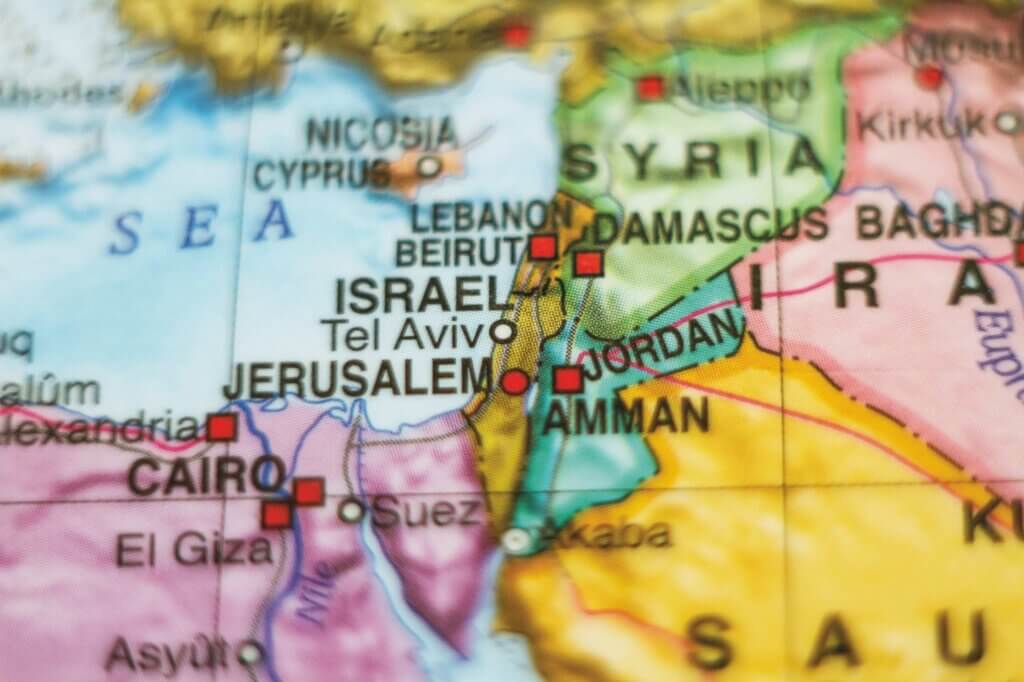
It will be in the time of Israel’s restoration, when nations are trying to carve up the Land of Israel. There has never been a time that fits this description better than today.
This means that if you come from a nation which constantly accuses Israel of genocide, apartheid and other lies, while remaining silent in the face of real atrocities in Nigeria or Congo, then the Church should be alarmed and not just see great times ahead, but also ask God for a genuine prophetic warning for your nation.
We need to understand that the roar of the Lion of Judah is not just a call for revival but also – and perhaps primarily – a call to judgment and reckoning with God. It means we need a return of true prophetic ministry in our time, which also dares to prophesy hard truths to the Church and the nations.
We pray that at this year’s Feast, God’s roar will be heard, with words of encouragement and revival, but also needed words of correction and repentance. Please pray with us that the Lord indeed will roar from Zion.
Main Photo: Credit Shuttershock