The Lord Roars From Zion: God’s Election over Israel Still Stands!
Published on: 10.9.2026By David R. Parsons, ICEJ Senior Vice President & Spokesman
For nearly three years now, Israel has been fighting a war of self-defense against the radical Iranian regime and its proxy terror militias throughout the region. This bitter conflict is still smouldering on multiple fronts and remains largely unresolved as to victor and vanquished.

The prolonged war since October 7 also has spawned an alarming wave of antisemitism worldwide. Jewish communities have faced numerous violent attacks in recent months, such as the Hanukkah massacre at Bondi Beach in Australia, and the series of assaults and arson attacks on Jews, synagogues and Hatzolah ambulances in the United Kingdom. Serious attacks on Jews have occurred in Germany, Greece, Italy, Lithuania and Spain. In North America, a Lebanese man recently rammed a truck loaded with fireworks and gasoline into a large Reform synagogue in Detroit, another car ramming targeted the Chabad world headquarters in New York, while three separate synagogues in Toronto along with two Jewish-owned bakeries elsewhere in Canada have all been strafed with gunfire.
Meanwhile, many on the Left and Right are ganging up on Israel, wrongly claiming that the Netanyahu government dragged the United States into the war against Iran, and blaming Israel for the troubled oil markets and resulting economic turmoil.
To top it all off, many are carelessly throwing baseless accusations against Israel for committing genocide and deliberately starving children in Gaza, among other grave crimes. Some even wildly blame Israel for the assassination of Charlie Kirk and the illicit escapades on Epstein Island.
Sadly, even many Christians are turning on Israel and denying that the Jewish people still matter to God. Are they right? Have the Jewish people lost their special covenant relationship with God? Or does their divine election still stand to this day? The answer to this question is more important than most realise.
Respecting the Election of God
Christians have multiple reasons why they should support Israel. First, we owe a spiritual debt to the Jewish people for all the spiritual blessings we have received through them, most notably our Bible and the Messiah (Romans 9:4-5, 15:27). We also owe them a moral debt to try to mend all the wounds inflicted on the Jews by past Christian generations. In addition, we simply are being obedient to our own Scriptures to “bless” the descendants of Abraham (Genesis 12:3), to “pray for the peace of Jerusalem” (Psalm 122:6), to “comfort My people” (Isaiah 40:1-2), and to “show them mercy” (Romans 11:30-32).
However, there is another core reason why Christians should support Israel: The enduring election of God over the Jewish people. This biblical concept holds that God has the right of sovereign election and we must respect His right and prerogative to choose whomever He wills to accomplish His purposes in the earth. It actually is the number one reason why we should stand with Israel, and this alone obliges us to exercise caution even when everyone else is reviling the Jewish people and nation.
Yet, many Christians still stumble over the biblical concept of divine election, especially as it relates to Israel. They believe it is an Old Testament concept while the New Testament teaches the universal love of God for all peoples. They contend that in Christ, there are no favoured ethnic groups. Indeed, Galatians 3:28 says “there is neither Jew nor Greek”. Yet the same passage also says, “there is neither male nor female”, and after we are saved we still have reason to distinguish between men and women. Likewise, in Romans 3:1-2, this same Apostle Paul writes that there is still an “advantage” to being Jewish. And in Romans 11:29, he insists God’s calling and election over Israel is “irrevocable”.
We are dealing here with a biblical paradox, which scholars call the “scandal of particularity”. It is true that God loves all men and “whosoever will may come” (Matthew 10:32; Revelation 22:17). Yet it is equally true that God chooses whom He will, and shows mercy to whom He will (Exodus 33:19; Romans 9:15). The principles of free will and divine election are equally true, and both are taught in the Old and New Testaments. Alas, the New Testament even affirms: “Jacob I have loved, but Esau I have hated.” (Romans 9:13)
The art of the Christian journey, then, is to learn to walk between these two paradoxical truths, and never cling to one truth to the exclusion of the other. Personally, I lean more towards God’s calling over my life. Indeed, Jesus said: “You did not choose Me, but I chose you…” (John 15:16). But I never take it to the point of forgetting that I also chose to follow Him.
Thus, it is a core tenet of Scripture that we must respect God’s right of sovereign election, and this applies most assuredly to His calling and election over Israel. In fact, this point is repeatedly made in the very first book of the Bible.
‘The Least of All Peoples’
The Book of Genesis is replete with examples of God choosing one person over another. We first find that, out of all the inhabitants of the earth, God called Abraham alone to “bless” or offer His salvation to “all the families of the earth” (Genesis 12:1-3; Isaiah 51:2). Because of God’s love for all humanity, He chose Abraham and spoke a blessing and birthright over Him that launched His plan for world redemption.
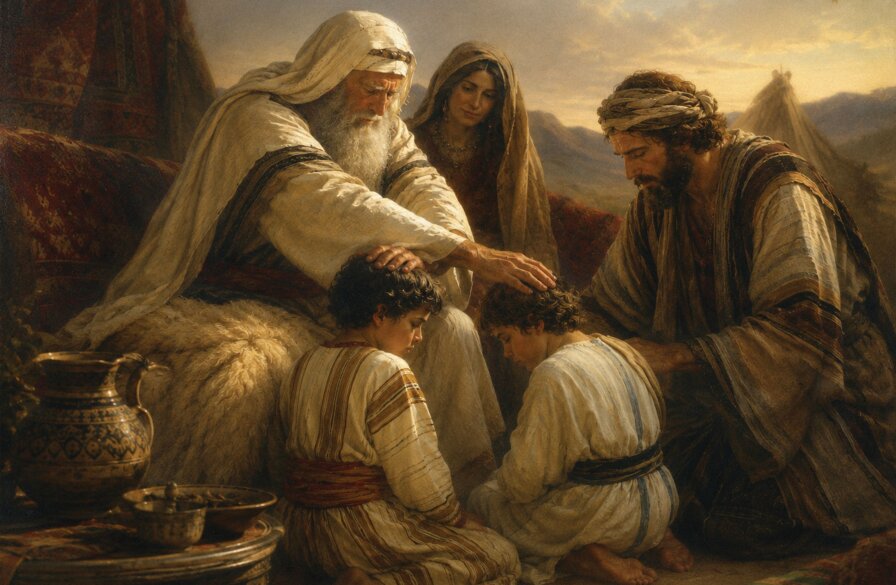
Now, the normal custom of the day was that this blessing and birthright should go to Abraham’s first-born son. Yet God chose to give it to Isaac rather than Ishmael, the firstborn. Then He chose Jacob over Esau. Next, He chose to give it to Judah, who was fourth in line after Reuven, Simeon and Levi. We also see the example of Ephraim receiving the blessing of the first-born over his older brother Menashe (Genesis 48).
Interestingly, the Jewish people to this day honour Menashe for accepting that his younger brother Ephraim would receive the greater blessing, thereby respecting the election of God. In contrast, Amalek – a grandson of Esau – never accepted the loss of the family blessing and birthright to Jacob, leading to perpetual conflict between their descendants (Genesis 36:12; Exodus 17:16).
Thus, the recurring lesson throughout Genesis is that God has the right to choose whom He wills to accomplish His purposes, and we do well to respect His election.
You see, God chooses or elects someone not out of favouritism, but for a purpose (2 Timothy 1:9), and He knows beforehand who will best accomplish that purpose. Judah’s brothers Levi and Joseph also were chosen, each for a special divine mission. God also chooses people for both good and bad. Pharaoh was chosen to show God’s glory through his hard heart (Romans 9:17).
Being chosen also comes with responsibilities, and burdens. Jesus taught us that we would be hated by the world, because He chose us and the world hated Him first (John 15:18-19). I think the same applies to Israel – the world hates the Jewish people simply because God chose them.
Consider that when God called out Israel to become a special nation before Him, it was not because they were smarter or stronger or better than anyone else. In fact, they were slaves in Egypt with no will of their own. He chose them to show Himself strong through something small and weak. God even called them “the least of all peoples” (Deuteronomy 7:6-8). So, we should not get too hung up by this principle of God’s right of sovereign election concerning Israel.
Even so, some Christians question whether that election over Israel still stands? A key to resolving this debate can be found in God’s choice of David to be king over Israel.
‘Touch Not My Anointed Ones’
With reluctance, the Lord first chose Saul to be Israel’s king. He was tall, strong, handsome – all the natural traits people looked for in a monarch. But he was a flawed character, and eventually God sent the prophet Samuel to find another king. This led him to Jesse, who presented his first seven sons, but Samuel asked if there were more. So, they sent for the youngest son David, who was keeping sheep in the field. And Samuel quickly anointed David as the next king.
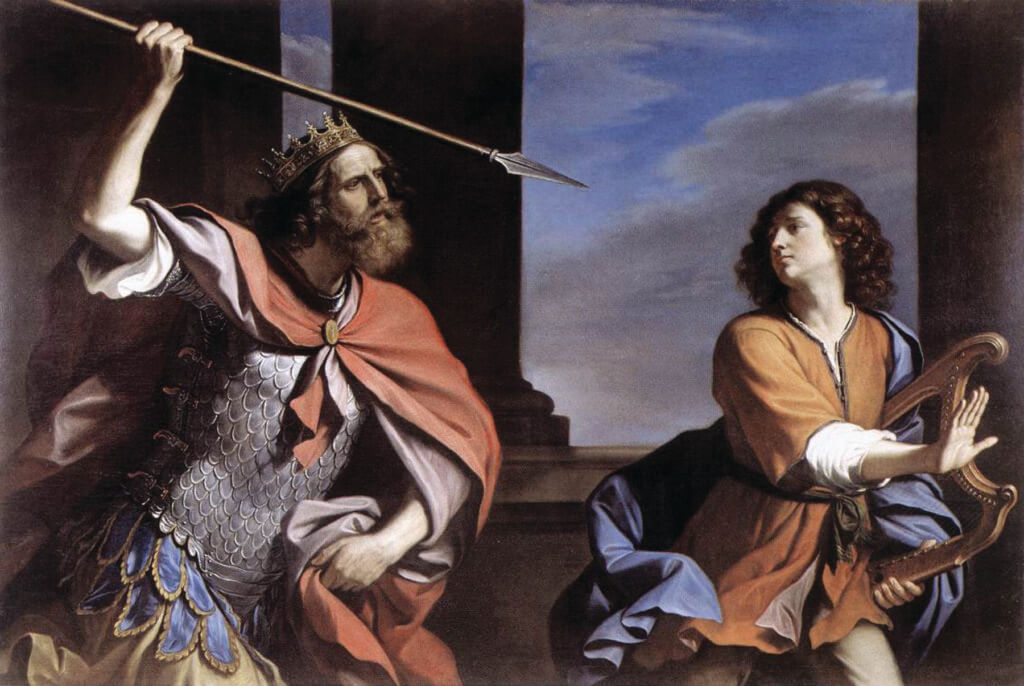
However, David never sought to topple Saul and claim the throne, even when Saul was trying to kill him. He had the chance in the cave at Ein Gedi (1 Samuel 24) and again in the Wilderness of Ziph (1 Samuel 26). David’s own men urged him to kill Saul while he had the opening. But each time, David repeatedly said he would not raise his hand against “the Lord’s anointed” (1 Samuel 24:6, 10; 26:9-11, 16, 23). Yet again in 2 Samuel 21:6, David referred to Saul as the one “whom the Lord chose”.
David considered Saul’s election not as a political but a sacred act. This election was still valid until God’s purposes over Saul were fully accomplished. David trusted God’s timing to make him king. He also likely held back out of respect for the Prophet Samuel. Finally, he realised it would set a bad precedent for Israel to force his way into the kingship, despite Saul’s failings.
David later penned a famous psalm highlighting this principle concerning Israel’s holy election, saying: “When they went from one nation to another, from one kingdom to another people, He permitted no one to do them wrong; Yes, He rebuked kings for their sakes, saying, ‘Do not touch My anointed ones, and do My prophets no harm’.” (Psalm 105:13-15)
In the same Psalm 105, David also referred twice to the nation of Israel collectively as “His chosen ones” (vs. 6 and 43). Elsewhere in the Hebrew Scriptures, the people of Israel are repeatedly described as “chosen” or “elect” (בָּחִיר – bachir), as well as “anointed” – using the same Hebrew word מָשִׁיחַ (māšîaḥ) which we use for the Messiah. And Paul says in Romans 11:28-29 that this election and calling cannot be revoked!
The Purpose Still Stands
So, is Israel still a chosen nation? This all depends on whether the purpose of God in Israel’s election has been fully accomplished. As Paul put it, the election remains so that the purpose of God’s election “might stand” (Romans 9:11).
Therefore, we can answer with confidence from Scripture that God’s choosing of Israel remains to this day because He still has purposes which He wants to accomplish through the Jewish people alone as they are regathered back in their ancestral homeland. The Hebrew prophets were all very clear that the physical return of the Jews to Israel and Jerusalem in the last days will lead to their spiritual return to God (see, e.g., Ezekiel 36:24ff). Jesus himself also affirmed this in Luke 21:24 and Matthew 23:39. Peter preached that Jesus will be retained in heaven until this restoration process spoken of by all the Hebrew prophets has been completed (Acts 3:21). And Paul said this ingathering and acceptance of Israel will mean “life from the dead” for the world (Romans 11:15). And through this process, Israel will birth the world into the Messianic age of righteousness and peace that we all need so much!
So, we must be cautious when it comes to Israel. David warned, “touch not my anointed ones!” This remains true, since their divine election still stands. We must respect the sovereign choice of a holy, all-knowing, merciful God. And if we do so, we will be protected from getting sucked into the torrent of false charges and demonisation being thrown at Israel. That immunity to antisemitism is crucial for the Church and for all peoples, since the Bible also is clear that God will judge all nations based on how well they have respected His election of Israel.
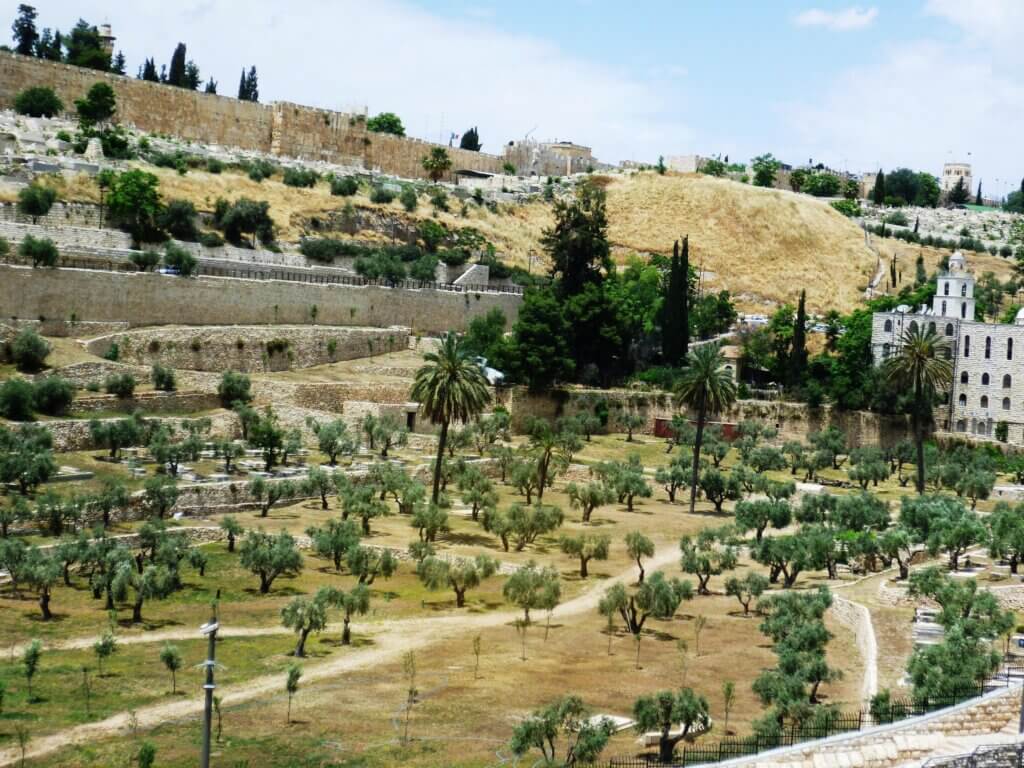
“For behold, in those days and at that time, when I bring back the captives of Judah and Jerusalem, I will also gather all nations, and bring them down to the Valley of Jehoshaphat;
And I will enter into judgment with them there on account of My people, My heritage Israel,
whom they have scattered among the nations; They have also divided up My land. They have cast lots for My people, have given a boy as payment for a harlot, and sold a girl for wine, that they may drink.” (Joel 3:1-3)
This Feast of Tabernacles, the Lord indeed is roaring from Zion. And the message is one of warning that will shake the nations. For He intends to vindicate Israel as His special treasure that was chosen for the sake of the entire world.
Main Photo: An Illustration of Jacob blessing Ephraim and Manasseh. (AI-generated image)