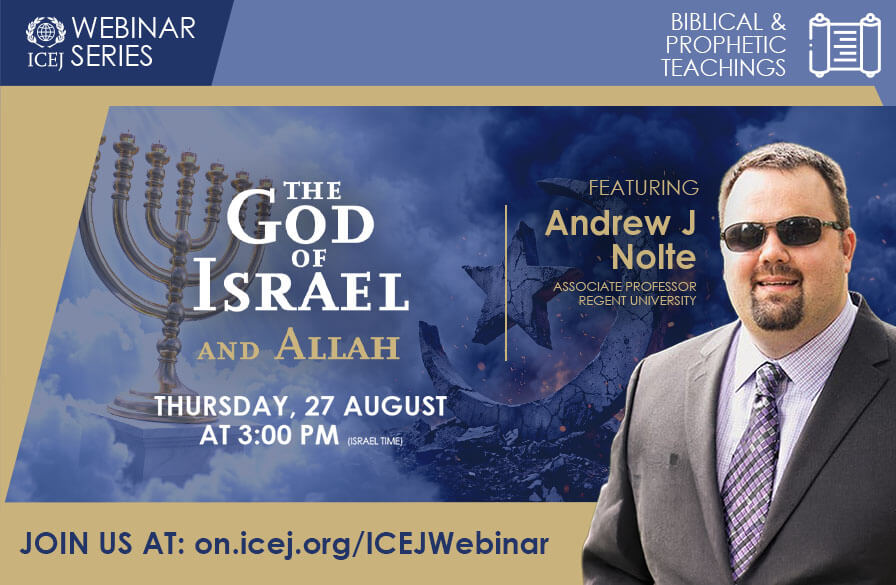
The God of Israel and Allah
Published on: 28.8.2026Summary of talk by Prof. Andrew J. Nolte
Christianity, Judaism and Islam are often called the three “Abrahamic faiths”, as they each trace their origins back to Abraham – the father of faith. This common denominator has encouraged the assumption that they are essentially different expressions of the same religious heritage. But does a common reference to Abraham necessarily mean they all have a common understanding of God, and His nature and character? And is the God of the Bible, Who so closely identified Himself with ancient Israel, the same as the Allah of the Quran?
In his recent presentation at the Jerusalem Summit, Professor Andrew J. Nolte of Regent University examines this question by placing the Biblical and Qur’anic portrayals of Abraham alongside one another. What emerges is not merely a theological disagreement but significantly different perceptions of God, humanity and the ordering of society.
Different Understandings of God
In Genesis, Abraham stands before God and intercedes for Sodom. He appeals not simply for what he wants, but to God’s own character as righteous and just. Remarkably, God permits the conversation to continue. We read how Abraham questions, appeals and even bargains with God.
Nolte contrasts this with the Qur’anic account, where Abraham also disputes concerning the people of Lot, but is told: “O Abraham! Desist from this.” For Nolte, the contrast reveals something fundamental: the God of the Bible invites Abraham into a deeply personal and relational encounter, in which intercession itself matters.
This raises a question for each of us: What kind of God do we believe in? Not merely what doctrines do we confess, but what picture of God actually shapes our prayers, our relationships and the way we see those who are different from us? If our understanding of God ultimately shapes how we understand human dignity, justice and society, then knowing God rightly is not an abstract theological exercise. It is a responsibility – with consequences for how we live and how we engage the world around us.
Nolte also explores how the perception of God has shaped attitudes among Christians and Muslims towards Jews, and why they matter for understanding antisemitism, Christian-Jewish relations and Zionism today.
What we believe about God – our understanding of His nature and attributes – never remains merely a matter of private faith. It shapes how we understand ourselves, how we view others and ultimately what kind of society we build. This gets even more evident when talking about Israel.
Our understanding of God influences our ideas of human dignity, freedom, authority, justice and our responsibility towards those who believe differently from us. Theology, therefore, has consequences far beyond the walls of churches, synagogues or mosques. Ideas about God eventually become the bedrock of our ideas about humanity and society.
Watch below this thought-provoking teaching by Professor A. J. Nolte on this week’s ICEJ Webinar and discover why our understanding of the God of Abraham still matters.