Israel is voting again– and this time it is about more than Bibi
Published on: 22.10.2026By Nick Hansen
If you live outside Israel and do not follow Israeli politics closely, there is a good chance you might only know about one Israeli politician: Benjamin Netanyahu.
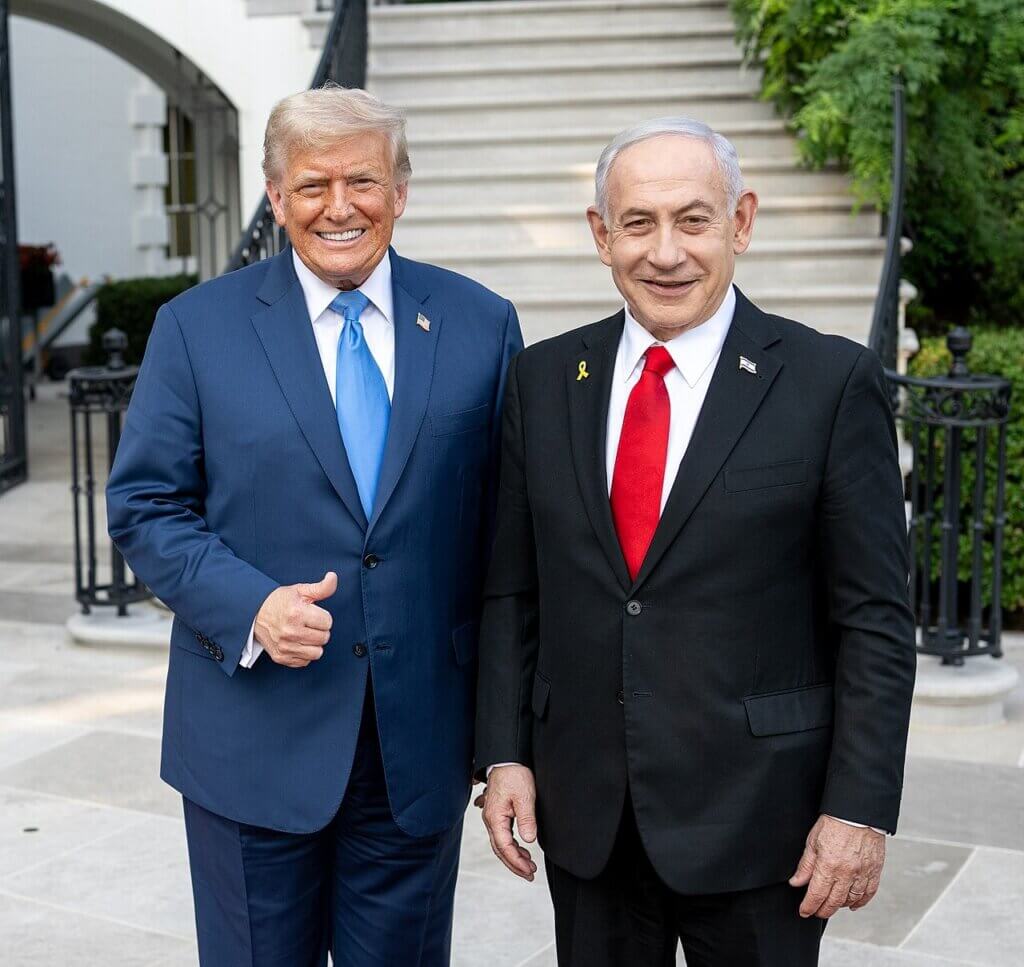
“Bibi” has been part of Israel’s political landscape for so long that it can sometimes seem as if Israeli politics and Netanyahu are almost the same thing. He first became prime minister in 1996 for three years and returned in 2009 to dominate the country’s political life ever since.
But when Israelis go to the polls next Tuesday, 27 October, the question is no longer simply whether they like or dislike Netanyahu.
Israel has been through three dreadful, yet striking, years since the Hamas attack of October 7, 2023. The country has fought hard on multiple fronts simultaneously and overcome. Lately, they confronted Iran directly and witnessed the regional balance of power change dramatically. At the same time, Israelis are still arguing about how October 7 could have happened, who should take responsibility and what kind of country should emerge from the war. Only one thing is certain, it will never be like it was before that awful day of terror.
That is the questions framing the election taking place now. And for the first time in a while, there is no shortage of people trying to write Israel’s next political chapter.
The other name you need to know
If Netanyahu is the one name you already know, Gadi Eisenkot is probably the next one you should learn.
Eisenkot is not a career politician in the traditional sense. He is a former chief-of-staff of the Israel Defense Forces and served in Netanyahu’s emergency government after October 7.
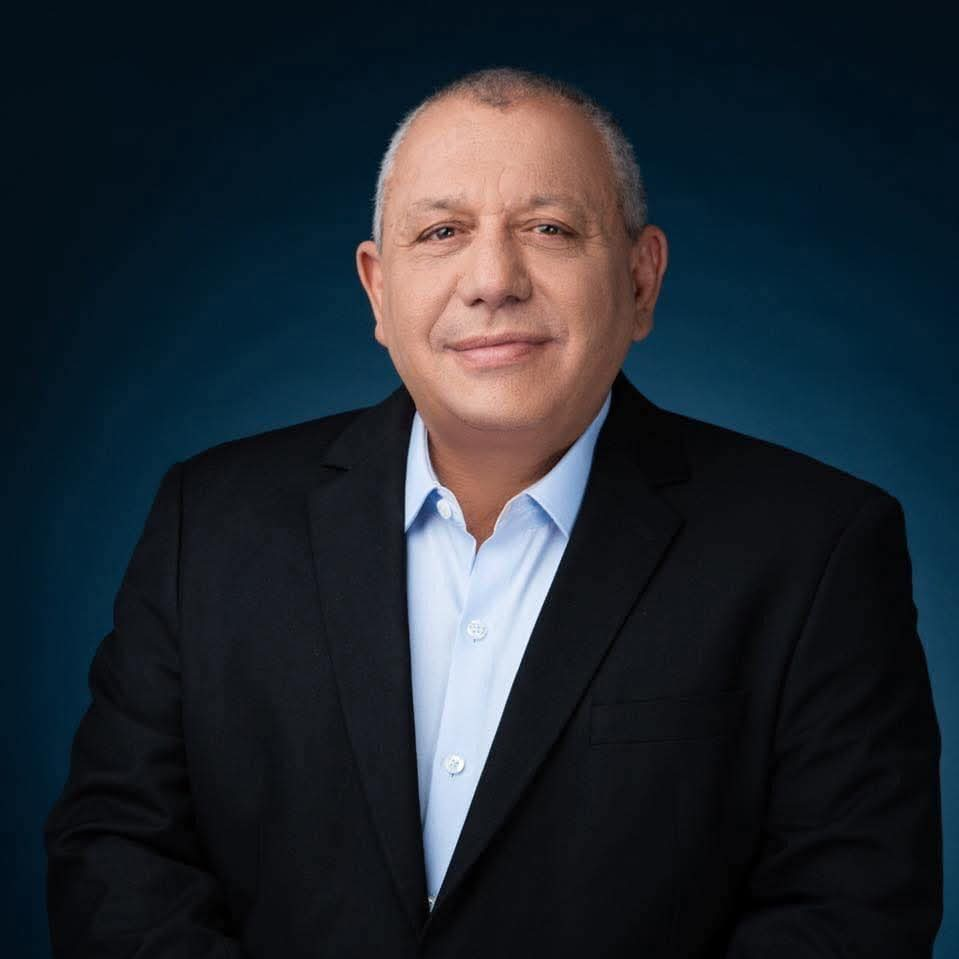
(Photo: Wikimedia Commons)
The war also became intensely personal for him. His 25-year-old son Gal was killed fighting in Gaza in December 2023. A nephew was killed in Gaza the following day.
Eisenkot eventually left Netanyahu’s wartime government and is now leading his own centrist party, Yashar. And he seems to be doing remarkably well.
Several recent polls have placed Yashar roughly level with, and sometimes ahead of, Netanyahu’s Likud. The media outlet KAN released a poll on Sunday, 11 October, which gave Eisenkot’s party 22 seats and Likud 20. Other polls put Likud slightly ahead, so there is no clear electoral picture yet.
But something has changed. Netanyahu is no longer facing an opposition without a plausible alternative figure at its center.
Eisenkot’s appeal is partly that he is difficult to portray as soft on security. He spent most of his adult life in the military and commanded the IDF. His disagreement with Netanyahu is therefore less about whether Israel should defend itself forcefully than about leadership, responsibility and what should happen after the war.
But it is not just Netanyahu versus Eisenkot
This is where Israeli politics becomes complicated. Israel might have two political blocks, but it is not a two-party system. No fewer than 37 electoral lists are officially competing for seats in Israel’s 120-member parliament. Yet opinion polls suggest that only around 13 to 15 have a realistic chance of crossing the 3.25% electoral threshold. This illustrates both the diversity and the fragmentation of Israeli politics.
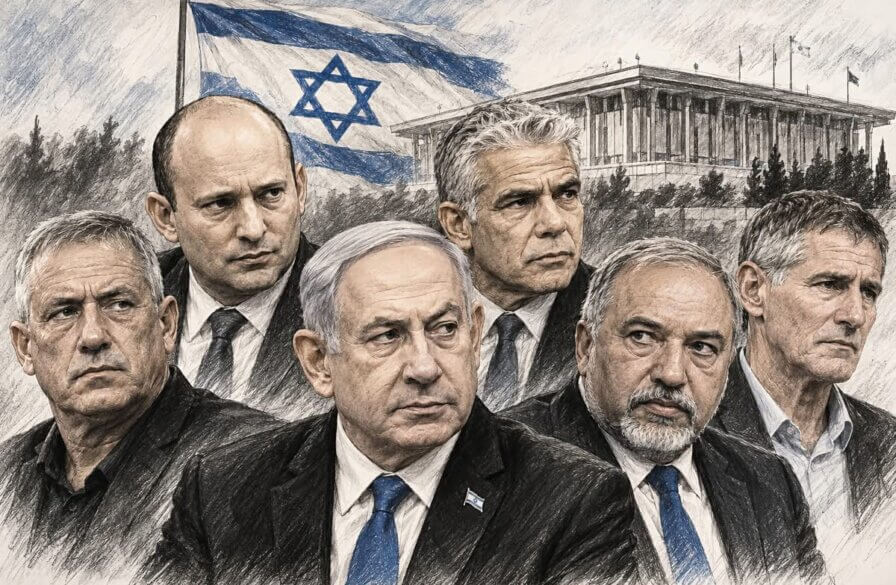
Former prime minister Naftali Bennett from Israel’s national-religious right is another person who polls strong. He has previously demonstrated willingness to govern with parties ranging from the right to the left and even an Arab party in order to replace Netanyahu.
There is Yair Lapid, a familiar center/left opponent of Netanyahu.
There is Avigdor Liberman, a secular nationalist and former defense minister, who is particularly outspoken about ending the exemption from military service enjoyed by many ultra-Orthodox men.
And there is Yair Golan, a former IDF general who now leads the Democrats, a merger of Labour and Meretz on the left.
They certainly do not agree about everything. In another political situation, some of them would probably be fighting each other. The only thing that currently unites them is the belief that the Netanyahu-era should end.
That makes this election unusual. It is not a simple contest between Israel’s traditional left and right. Some of the politicians trying to replace Netanyahu come from the right themselves.
So what are Israelis actually voting about?
October 7 hangs over everything
Netanyahu’s supporters look at what has happened since that terrible morning and see an Israel that recovered from disaster and fundamentally changed the strategic map. Hamas has been severely weakened. Hezbollah has suffered enormous losses. Iran and Israel have confronted each other directly. Israel has demonstrated military capabilities that few of its enemies believed it possessed. Netanyahu argues that he was the leader who guided the country through that transformation.
His opponents ask a different question: Who was responsible for Israel being so vulnerable on October 7 in the first place? That argument has never disappeared. Neither has the argument over the hostages, or the demand for a full state Commission of Inquiry into the failures surrounding October 7.
But the election is also about something much closer to everyday Israeli life: Who should serve in the army? Hundreds of thousands of Israeli families have carried an extraordinary military burden during three years of war. Reservists have spent months away from their homes, jobs and families.
At the same time, up to 80,000 ultra-Orthodox men continue to claim exemptions from military service. That arrangement has become increasingly difficult to sustain politically. Netanyahu depends heavily on the ultra-Orthodox parties Shas and United Torah Judaism. Several of his opponents are demanding much broader military service. So, behind the big questions about Iran, Gaza and the future of the Middle East is a very personal Israeli question: Who carries the burden?
Why the polls don’t give us the answer
Here is the frustrating part for anyone trying to understand an Israeli election from abroad. Israelis do not actually vote for Netanyahu or Eisenkot as prime minister. They vote for parties. Of the 120 seats in the Knesset, a majority government needs the support of 61 members. That means being the biggest party is not enough.
Imagine Netanyahu’s Likud wins 24 seats and Eisenkot wins 22. Netanyahu has technically “won” the party contest. But if Eisenkot can persuade enough other parties to join him and reach 61 seats, Eisenkot could become prime minister.
The opposite is equally possible. That is why the Israeli election night is really only the beginning, giving way to “coalition wrangling”. And right now neither side consistently shows the ability to reach 61 seats in the polls, since around 12-15 seats will likely go to non-Zionist Aran parties that neither side wants in their coalition.
There is another complication. A party needs at least 3.25% of the national vote to enter parliament. Several smaller parties are hovering dangerously close to that line.
Former general Ofer Winter, for example, receives four seats in some polls and none in others. Benny Gantz, once considered Netanyahu’s principal challenger, has just taken his Blue and White party off the ballot due to poor polling.
If a party receives 3.2% rather than 3.3%, tens of thousands of votes can effectively disappear from the parliamentary calculation. In a close election, that can change who is able to form a government. So, when someone tells you that one side is “winning” because of a particular opinion poll, be cautious. At the moment, Israel has a very tight race without any predictable result.
What happens if Bibi stays?
If Netanyahu manages to assemble another government, there will be substantial continuity. Israel will likely continue confronting Iran and trying to prevent Tehran from rebuilding the military network it developed around Israel. Netanyahu will continue insisting that Israel must retain the ability to act independently against threats from Iran, Hezbollah and Hamas.
But the really important question would be: Who does he need in order to reach 61 seats?
If Netanyahu again depends on the ultra-Orthodox parties and the national religious parties, including Itamar Ben-Gvir, those parties will have considerable bargaining power. That matters for military conscription, judicial reforms, issues of religion and state, and long-term policies regarding Judea and Samaria.
And it matters internationally. Some of Netanyahu’s potential coalition partners have positions that create considerable friction with Western governments.
A broader Netanyahu coalition containing more centrist parties would look quite different. So even a Netanyahu victory would not necessarily mean simply “more of the same”. The coalition would matter almost as much as the prime minister.
And what if Bibi is out?
This is perhaps where people outside Israel most easily misunderstand the election. A Netanyahu defeat would certainly be a political earthquake, but it would not necessarily mean an Israeli revolution in foreign or security policy.
Eisenkot is a former IDF chief-of-staff. Bennett comes from the nationalist right. Liberman is a security hawk. Several of the politicians trying to replace Netanyahu are by no means members of a Europe-appeasing movement.
A new government would still regard Iran as a major strategic threat. It would still demand security guarantees concerning Gaza. It would still be deeply concerned about Hezbollah rebuilding in Lebanon. And it would still be very reticent about Palestinian statehood due to October 7.
Where the change could be much more visible is inside Israel and in Israel’s relationships with its allies.
A new government would probably move quickly towards establishing a state Commission of Inquiry into October 7. Military service for the ultra-Orthodox would become a major issue. The judicial and constitutional confrontation that divided Israel before October 7 could take a different direction. And Israel might deliberately try to repair some of the damage in its relationships with European governments and parts of Washington.
There could therefore be a considerable change in tone and political priorities without an equally dramatic change in Israel’s basic approach to the threats surrounding it.
There is also a third possibility
Nobody wins. Or, more accurately, nobody can assemble a majority of 61 seats. That is entirely possible under Israel’s political system.
A minority government can take office if more members of parliament vote for it than against it. Once formed, it cannot be removed through a simple vote of no confidence unless at least 61 members agree on an alternative government. There is precedence for a government like this. Naftali Bennett managed to do this in June 2021.
To form such a precarious minority government, it requires a lot of negotiations, meetings, promises about ministries and endless speculation about who will sit with whom.
President Isaac Herzog will consult the elected parties and ask which candidate they recommend forming a government. Someone will receive the mandate. Then the bargaining begins.
A politician who appears relatively unimportant today could suddenly become the person holding the 61st seat.
And if nobody succeeds? Israel could eventually find itself voting again. That too has happened before in recent years, and few want to repeat it.
For Israel’s friends, there is something more that is important to understand
Those of us outside Israel sometimes make the mistake of viewing the country through the personality of its prime minister. Netanyahu’s extraordinary political longevity has made that understandable. But Israel is bigger than Bibi.
It is a noisy, argumentative parliamentary democracy containing secular Jews, religious Jews, ultra-Orthodox communities, Arabs, Druze, immigrants, settlers, Tel Aviv liberals, development towns, kibbutzim and almost every political opinion imaginable.
October 7 united much of the country for a time. Three years later, the arguments about what Israel should become have returned, and perhaps they never really disappeared. That is why this election should not simply be understood as: “Are Israelis for Netanyahu or against him?” The deeper questions are about responsibility, security, military service, the courts, religion, the Palestinians and what kind of political leadership Israel needs after three years of war.
What should we expect on October 27?
Most likely it will be a messy answer. But keep an eye on Netanyahu and Eisenkot, certainly.
But also watch the smaller parties and who crosses the 3.25% threshold. Watch how many seats Netanyahu’s entire bloc receives rather than simply how many Likud receives. Watch whether the parties opposing him can agree to govern together or only agree on their averseness to Netanyahu.
And above all, remember that election night will probably answer only the first question: What parliament have Israelis elected?
The second question may take days or weeks: Who can turn those 120 members of parliament into a government? That is when we will discover whether Benjamin Netanyahu has once again survived or whether Israel is finally entering the post-Netanyahu era.
Either outcome would be historically significant.
But neither changes the fundamental reality facing the country. The next Israeli prime minister, whoever it is, will inherit Iran, Gaza, Hezbollah, a changing Middle East, strained international relationships and an Israeli society still processing the trauma and consequences of October 7.
The election will decide who gets the job. And no matter who gets it, the job will not be any easier.
Main photo: Israeli politicians – AI-generated