ICEJ’s Gift of Love, a Stronger Lifeline
Published on: 12.11.2026By Nick Hansen
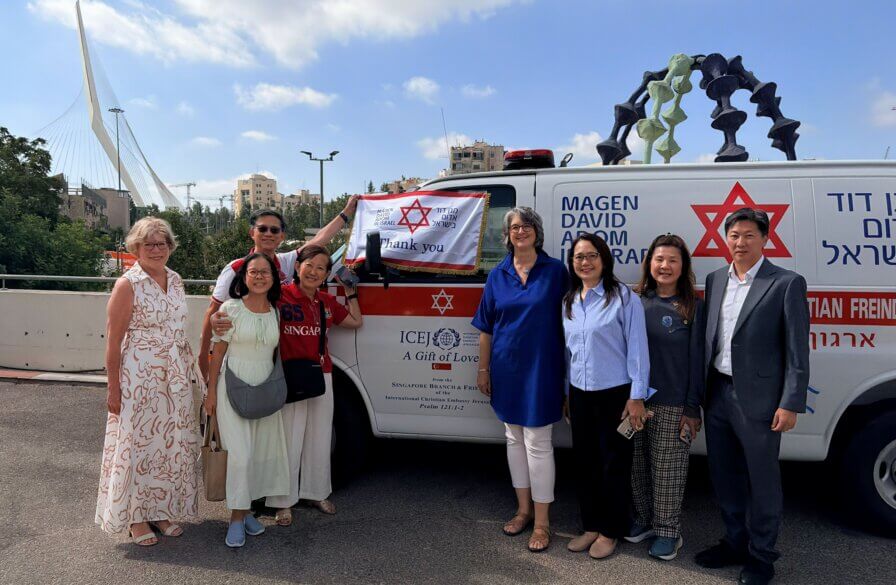
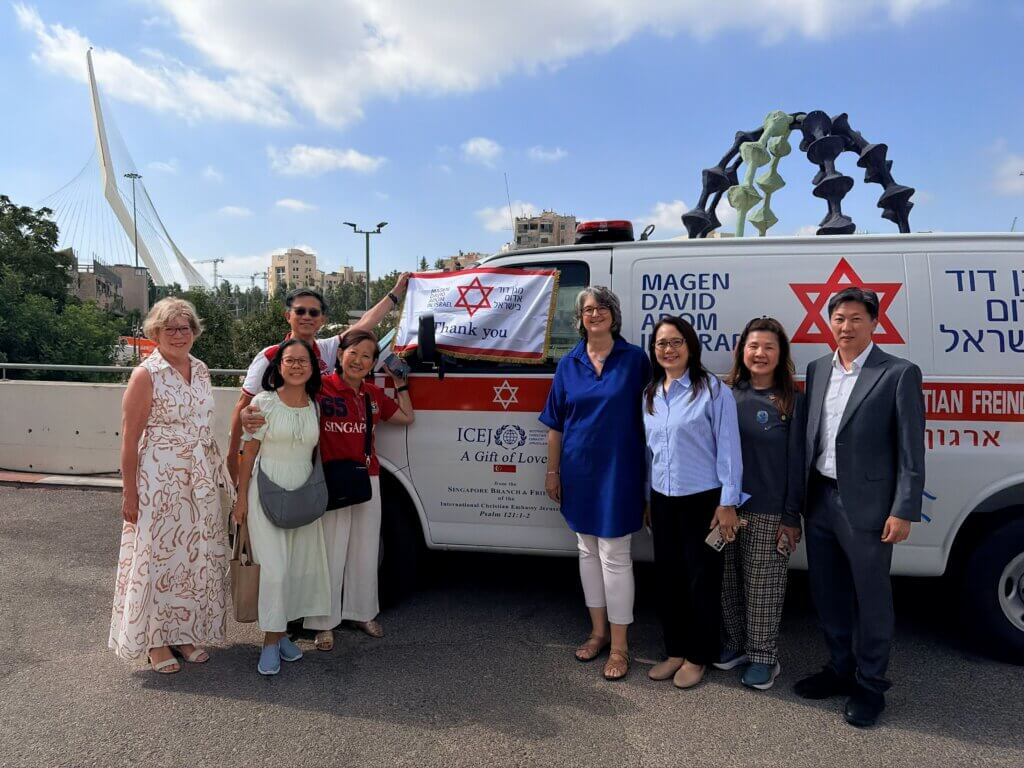
The inscription is unveiled: “A gift of love from Singapore.” Around the ambulance, donors and their Israeli hosts gather for photographs, celebrating generosity made tangible. Through ICEJ Singapore, Christians have provided Magen David Adom (MDA) with an ambulance to help save lives.
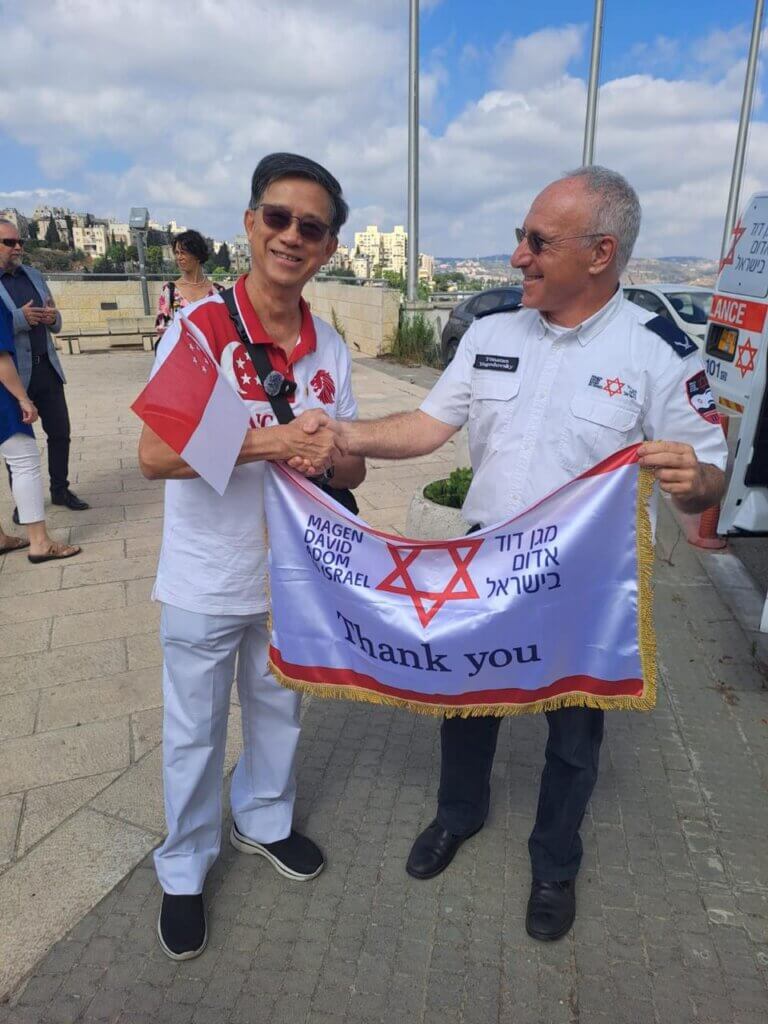
For ICEJ Singapore National Director Jehu Chan, who leads the sponsors, the moment brings together faith and practical compassion.
“We are very blessed to be part of this movement,” he says, “and to be a blessing to this people.”
The ambulance will serve in Tel Aviv, responding to people whose names the donors may never know. An MDA representative hopes it will also join the organisation’s “Stork Club”: ambulances in which babies have been born. A gift intended to preserve life may also welcome new life into the world.
A Commitment That Continues
Later, the conversation turns to what keeps such a vehicle on the road. Armoured vehicles suffer particularly heavy wear.
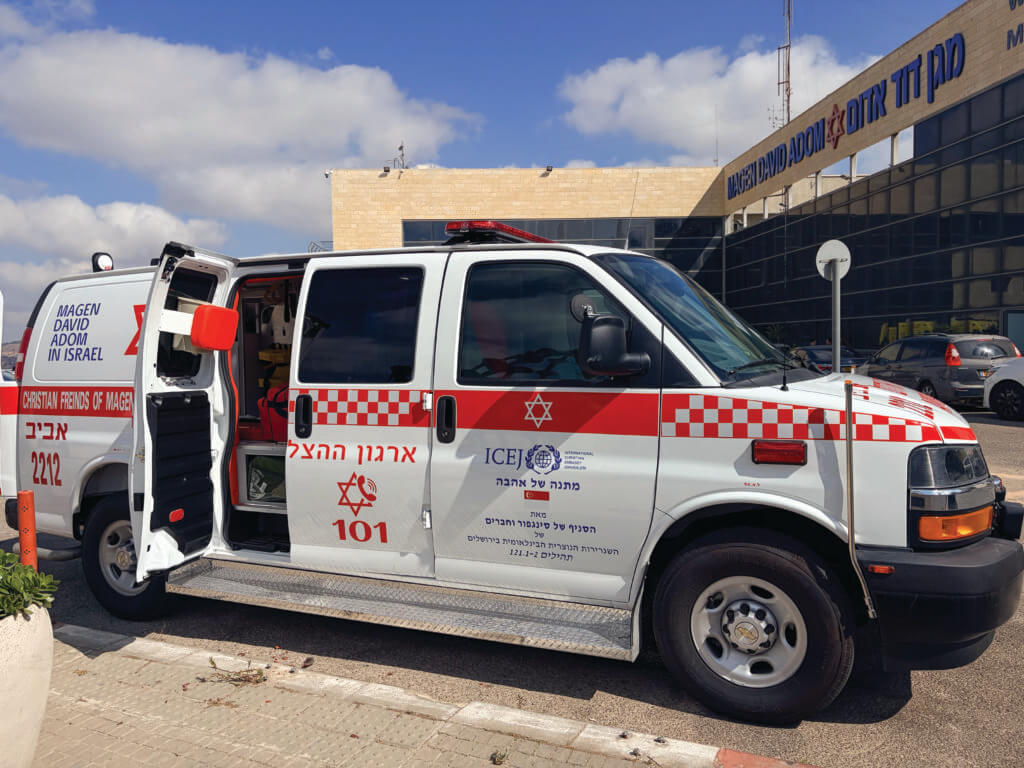
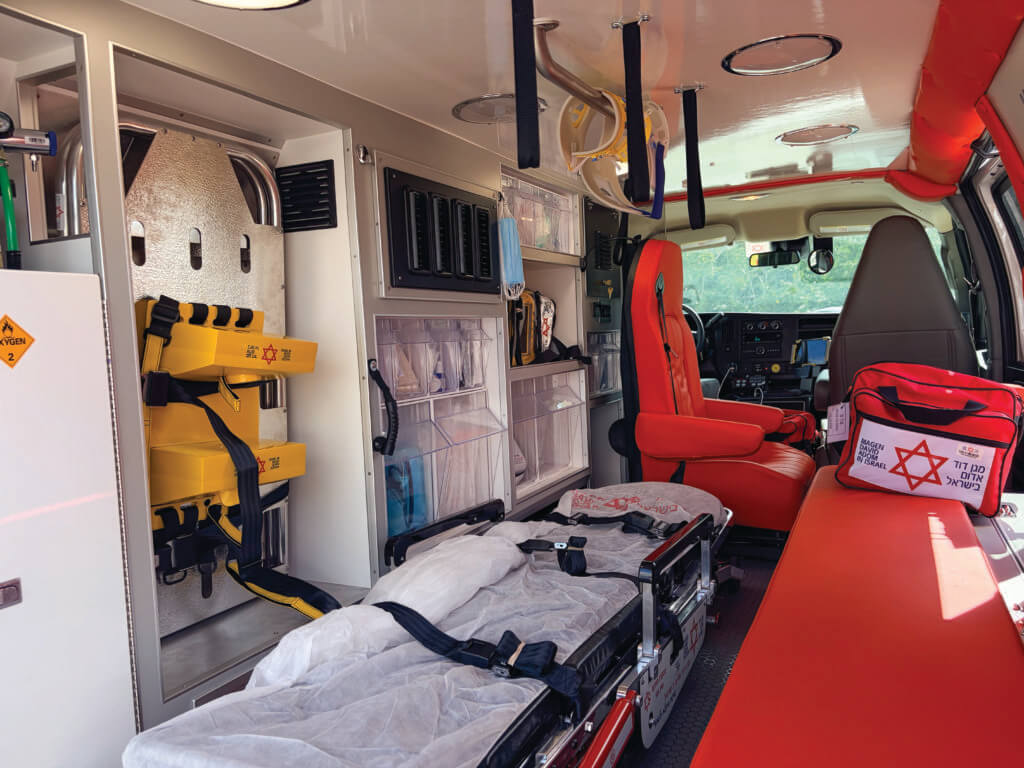
Anne Ayalon, an MDA representative, explains the work behind the donation: equipment, drivers, volunteers, emergency medical technicians and maintenance. “It’s much more than just an ambulance,” she says. The vehicle is equipped to respond to a wide range of medical emergencies.
Singapore’s contribution includes the equipment inside the ambulance and its first year of maintenance.
For Jehu Chan and the Singapore supporters, this gift belongs to a wider commitment to Israel. He speaks of gratitude for Israel’s contribution to Singapore’s development. The supporters’ ambitions also extend to sponsoring an entire flight bringing Bnei Menashe immigrants to Israel.
At the dedication, he thanks the Christians who made the donation possible. “Now we can see the realisation of their effort and their love for the people here,” he says.
Preparing for Tomorrow’s Emergencies
For ICEJ AID, that generosity opens a conversation about where future gifts can make the greatest difference.
ICEJ Vice President for Aid Nicole Yoder describes a nationwide reassessment of emergency preparedness, requiring new equipment and solutions.
“7 October made everyone aware that they may need to stand on their own for a longer time than originally anticipated before help could come. So, communities have been rethinking how they care for residents, communicate and coordinate assistance. Local teams are preparing for emergencies that could last much longer than previously imagined,” she says.
The needs include communication devices, defibrillators, paramedic kits, generators, firefighting equipment and emergency rescue equipment. Emergency response and resilience training is also a need high on the list. Protected command centres are also being considered, enabling municipal teams to coordinate assistance while under attack.
Nicole says ten regional councils have recently requested communications equipment. Funding was available to assist two.
“The list is growing longer,” she says.
Such investments may be harder to capture in a photograph, yet they can help entire teams use their skills and resources more effectively. A communications link can improve coordination across a community; training can strengthen a service already reaching many families and give community leaders the tools they need to stay at their post to meet overwhelming needs.
Jesus’ miracle of the loaves and fish offers an image of provision reaching far beyond its original scale. In practical terms, strengthening existing systems can help a single contribution benefit many people, extending the reach of resources and saving lives.
Reaching Those Previously Overlooked
Nicole Yoder then describes work with social welfare departments in northern border communities that gives this approach a human face. In Deir al-Assad and Shlomi, ICEJ support has helped local teams strengthen both their emergency preparedness and their everyday capacity to care for vulnerable residents.
The assistance has included first-responder and resilience training, rescue equipment, additional community caseworkers, digital tools for mapping needs and protected spaces, Wi-Fi in public shelters and specialised kits for elderly residents, children and people with disabilities. In Shlomi, AI training has also helped staff cope with increased caseloads, reducing the average processing time for a case from four and a half hours to about 50 minutes.
With ICEJ’s support, social welfare departments reviewed how they would identify and assist vulnerable residents during emergencies. They gathered information about elderly people: where they lived, whether they had family nearby and who would need food or help.
According to Nicole Yoder, the review identified 30 % more elderly people needing assistance than had previously been recognised.
Among the discoveries was an elderly person who had been lying on the floor at home for days, alone and unnoticed.
Better information changes where help is sent and who receives it. A food parcel depends on someone knowing which door to knock on. Emergency assistance depends on knowing who cannot leave home unaided.
“We enabled the people with that kind of knowledge and training to come in and help them look at it,” Nicole Yoder explains.
The impact has gone beyond new equipment and procedures. Nicole recalls the director of social welfare in Shlomi saying that the training had completely changed the way she thought about her work and made the department more innovative. “We don’t think about our work in the same way anymore,” she said, convinced the change would last well beyond the present crisis. In Deir al-Assad, another social worker who had been close to quitting told the team that the training and support made the difference and helped her decide to remain at her post serving the community.
ICEJ’s relationships with local communities create a particular opportunity to connect international generosity with gaps in existing services. Through these relationships, the AID team can identify overlooked needs and support practical improvements in training, coordination and equipment.
The result can extend beyond any individual donation: existing teams become better prepared, resources reach further and vulnerable people are less likely to be missed.
An Ambulance Tells a Bigger Story
Back at the ambulance, the photographs capture a gift of love made visible. Its significance will continue through the people it serves.
Across Israel, further opportunities await: a communications link between responders, equipment for a local team, better planning for elderly residents or support that keeps an existing service working.
Please donate to ICEJ AID’s Israel in Crisis emergency response work. Your generosity can help strengthen Israel’s communities, protect lives and ensure that help reaches those who need it when they need it most.