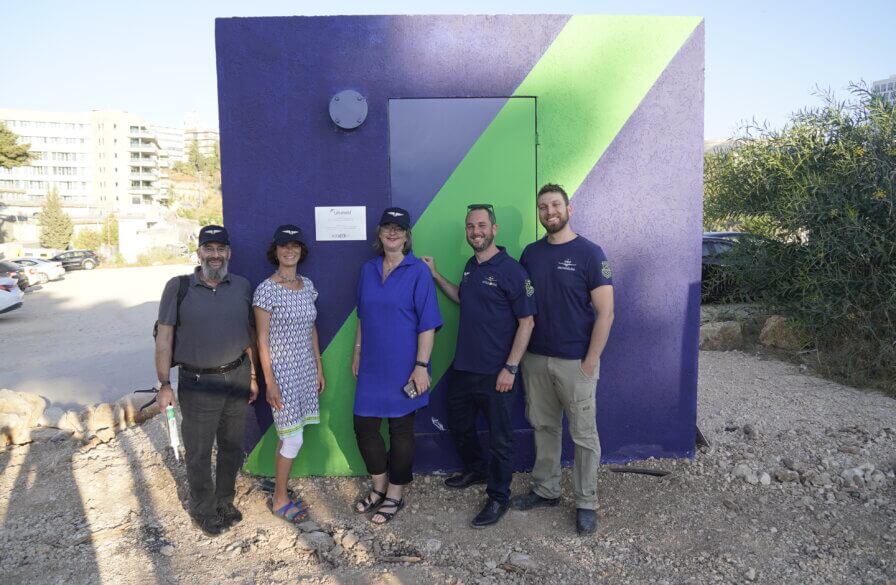
ICEJ donates bomb shelter for Jerusalem’s first civilian medevac helipad
Published on: 13.8.2026By Naomi Ammon
“The last time we were here there was nothing, just dirt. And now we’re walking past a helipad, crew quarters, and a bomb shelter” ICEJ Aid assistant Jannie Tolhoek laughingly remarked.
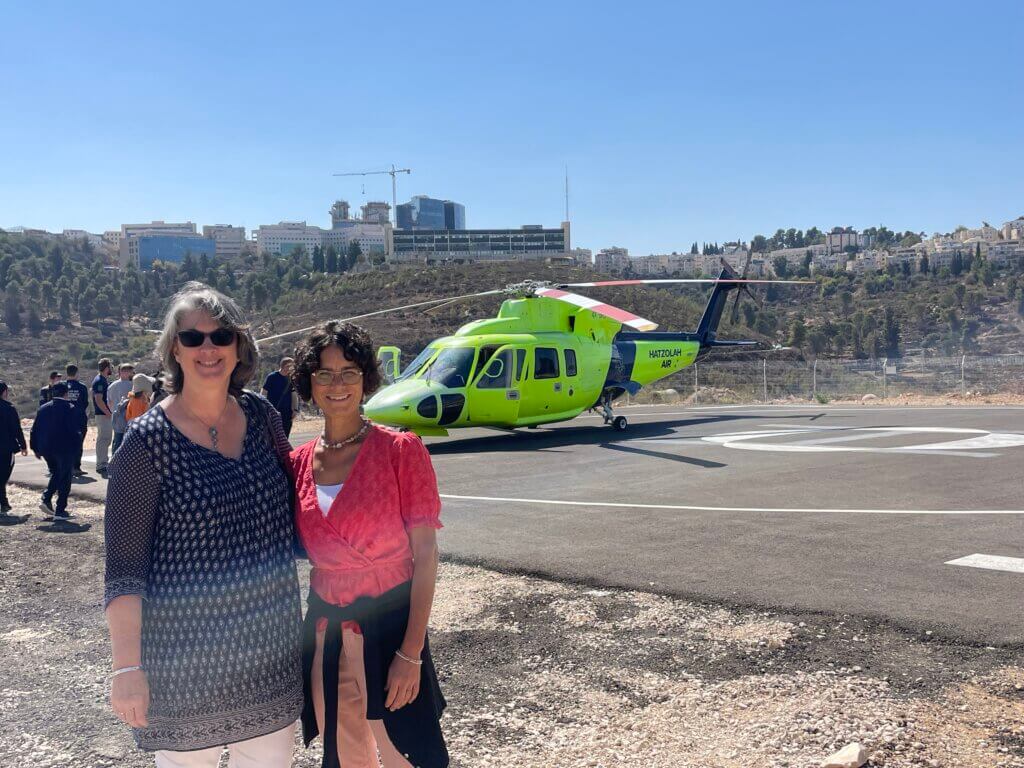
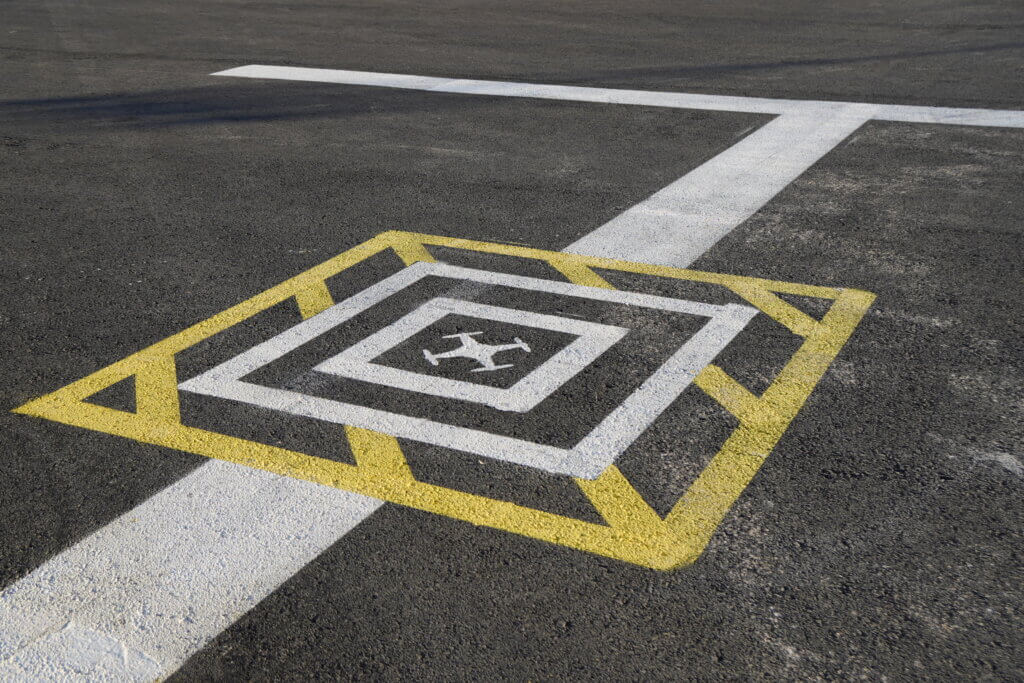
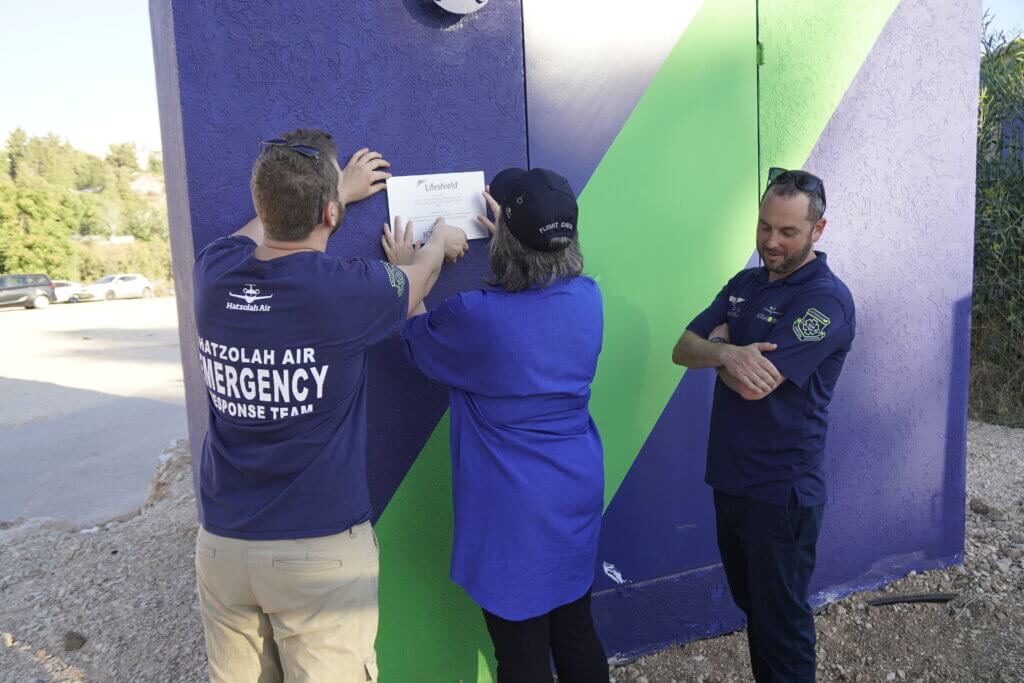
We set foot on the freshly painted tarmac of Hatzolah Air’s new base in Jerusalem—the city’s first civilian medevac helipad—to dedicate a bomb shelter which will now allow it to operate in times of emergency.
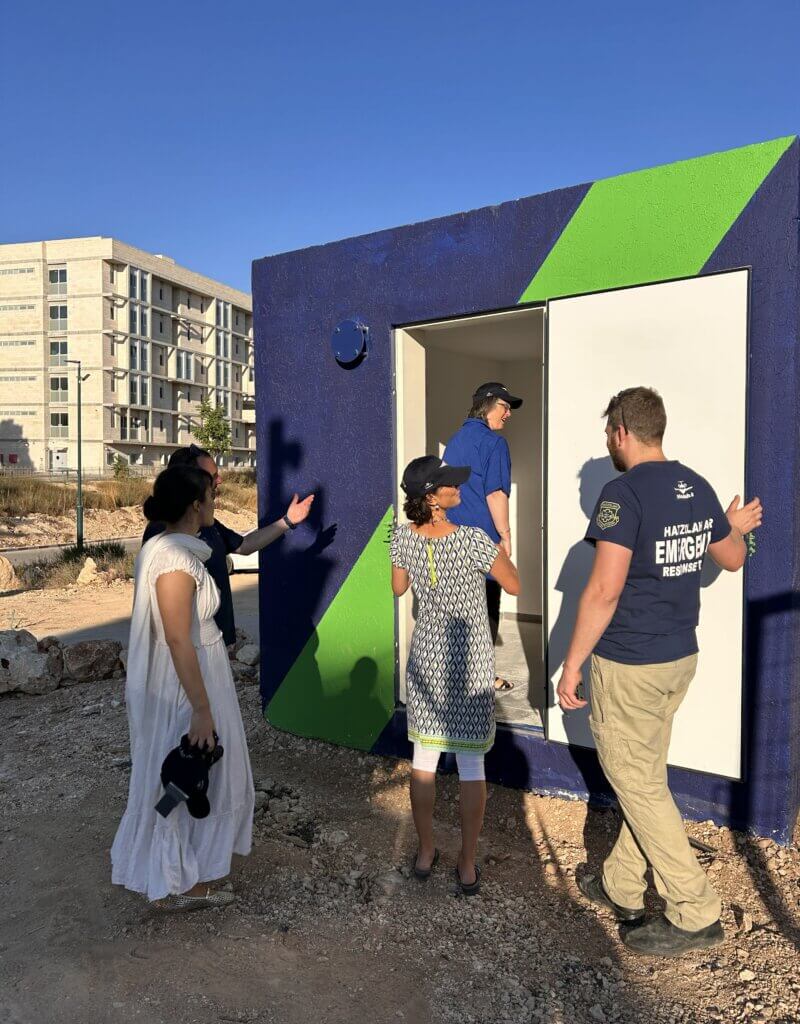
The shelter was a gift from the ICEJ’s branch in the United Kingdom, where four Hatzolah ambulances were set on fire in an antisemitic attack just last March in the largely Jewish neighbourhood of Golders Green, in north London.
Hatzolah Air-Israel was established just five years ago to alleviate Israel’s urgent need for medevac helicopters. At the time, medical transport depended on IDF military aircraft, a less-than-optimal choice since their daily missions might mean they are not readily available.
As most of the country’s hospitals are in major hubs like Tel Aviv or Jerusalem, many Israelis live in towns without hospitals or life-saving care nearby.
Somewhere between serving 500 days of reserve duty, parenting children, and residency in medical school, Dr. Aharon Adler, the director general of Hatzolah Air Israel, established the first two air bases, working alongside Magen David Adom, to alleviate this vulnerability. They opened two helipads in the north (near Tiberias) and the south (near Beersheva) that operate a fleet of five fully kitted aircraft, 24 hours five days a week.
From these bases they have rescued or repatriated Israelis from throughout the country and around the world. Serving as our host at the shelter dedication, Dr. Adler reminisced about one mission that involved rescuing a girl with a brain infection from Ukraine, transporting her by ambulance to the flight pick-up location overnight, as vehicles on the roads were being targeted by day. Once on board, she was seizing continuously and required ventilation.
“I’ve never moved so much!” Aharon recounted. “Six hours of constant care. Fluids, ventilator, suction.”
On another mission, they rescued Syrian refugees from Cyprus. On another, they received a call from desperate grandparents and returned their grandson safely home just before Shabbat.
Itay, a Hatzolah paramedic, then explained the impact of flight transport in critical situations.
“I got a call from a mother in Beit Shemesh. Her baby had no pulse. But there’s no hospital in the city, so to drive an ambulance from there to Jerusalem is 40 minutes through windy roads which makes doing compressions for CPR very difficult,” he noted. “If you have a plane, you can get them to the hospital …literally at the door, in 15 minutes, and that could save her life.”
As they moved towards the Jerusalem base launch, everything began to take shape. The crew quarters were constructed and awaiting furniture. The tarmac had a new coat of paint and helipad markings. The equipment was being donated. Only one item remained undone.
“It was mandatory! We could not do this helipad without a bomb shelter,” Dr. Adler explained.
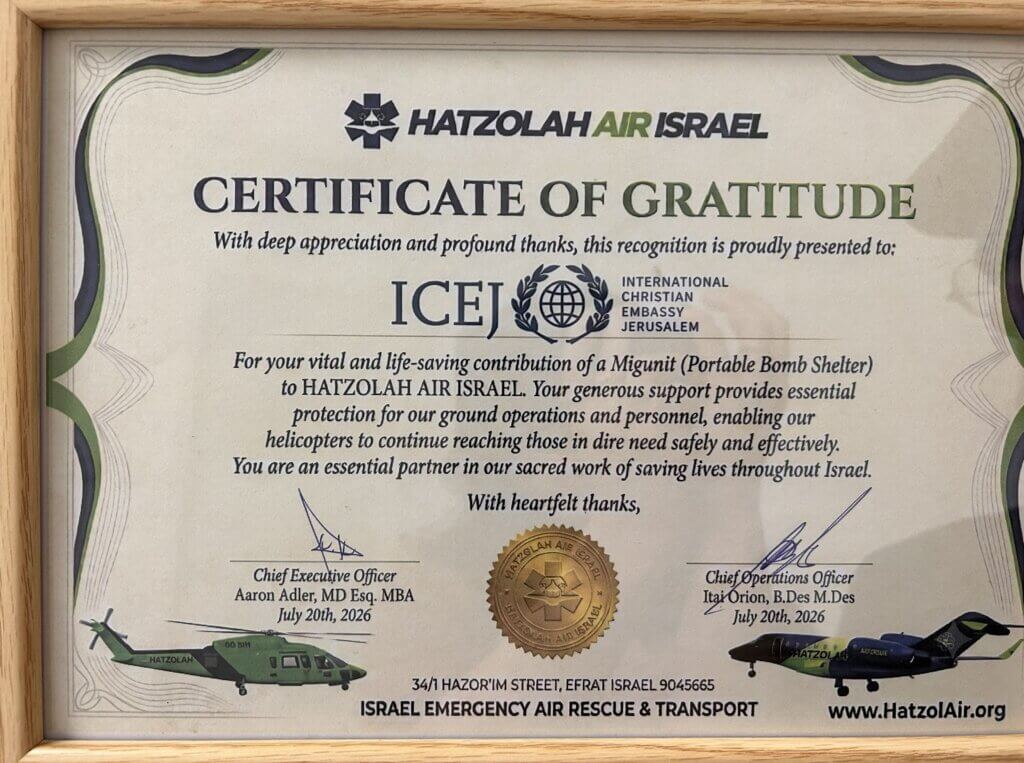
The ICEJ is very familiar with this situation, having donated over 250 portable bomb shelters across Israel in recent decades so important public buildings and services can remain open during war and other crises. Thus, we were delighted to participate in adding yet another shelter right here in Jerusalem. Dr. Adler presented Nicole Yoder, ICEJ Vice President for Aid & Aliyah, with a certificate of appreciation, while Nicole in turn placed a commemorative plaque near the shelter door.
“The Jewish people have been through a lot and due to antisemitism, Jewish people don’t always feel safe around the world”, noted Dr. Adler. “I want people to have our number and feel safe. During emergencies, when people do not know what is happening, or what to do…when they just want to go home, it is comforting to know someone is able and waiting to come pick you up.”
“There is much to do to strengthen Israel in these difficult days”, Nicole responded. “Your mission is an essential one. We are proud to work with our friends at Operation Lifeshield to provide the bomb shelter that will enable this medical evacuation station to remain open at all times. And we want the Jewish people to know that you have many Christian friends around the world who care for you and who are supporting you.”
To participate in this and similar humanitarian projects, please give to our Israel in Crisis fund. Donate today at: help.icej.org/crisis
Please watch our special video of the bomb shelter dedication

Photos: ICEJ and Meital Bowman/Operation Lifeshield