‘I Am Israeli’- Eva Erben’s Urgent Message to the Next Generation
Published on: 10.11.2026By Jannie Tolhoek
Eva Erben, who is 95, carries a lifetime of memories shaped by unimaginable loss, extraordinary resilience and the remarkable rebirth of Israel. As a young Jewish girl, she survived the Holocaust, losing her parents and many members of her family. In 1949, she and her husband began a new chapter in the newly established State of Israel, determined to build a future from the ashes of the past.
Yet Eva’s story is about far more than survival. It is about the preciousness of life, the courage to start over and the responsibility each generation carries to confront hatred.
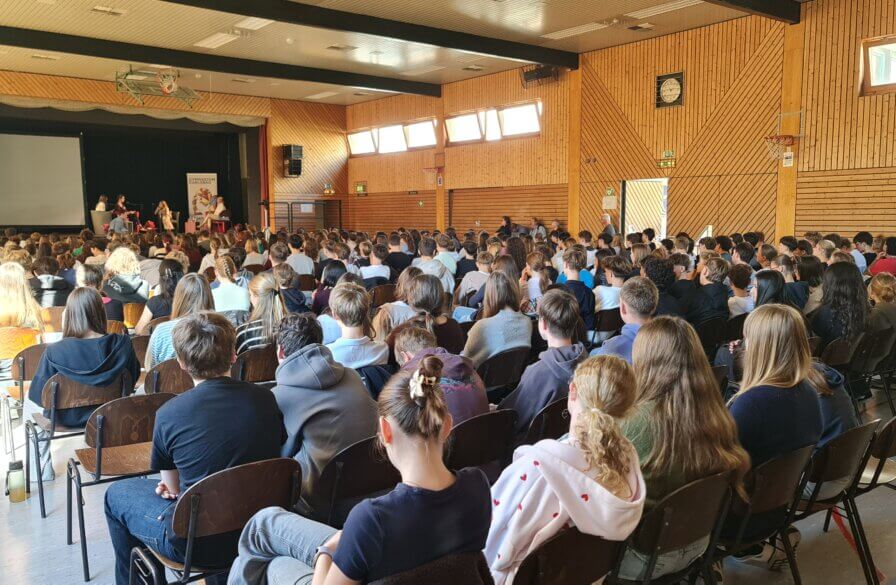
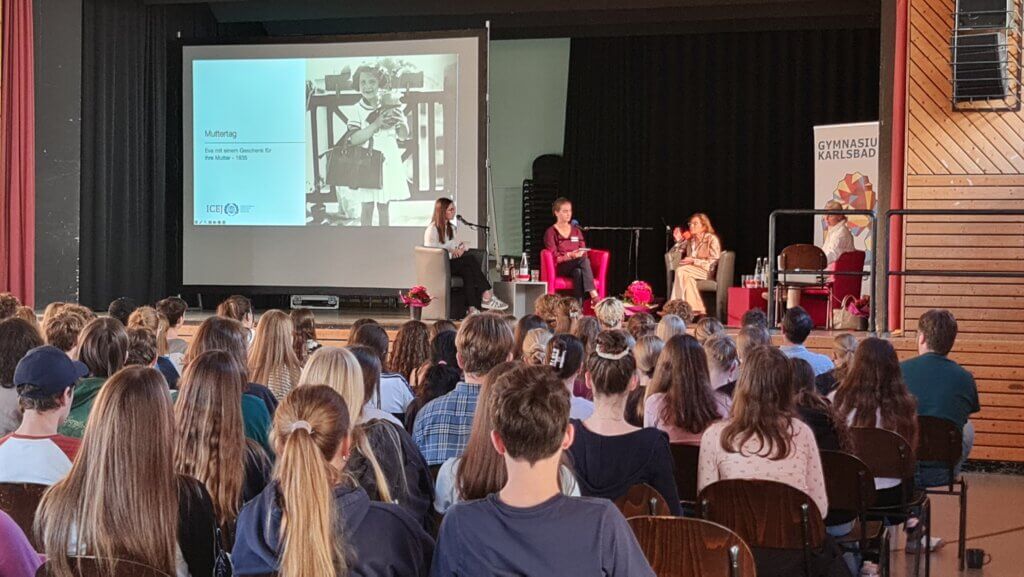
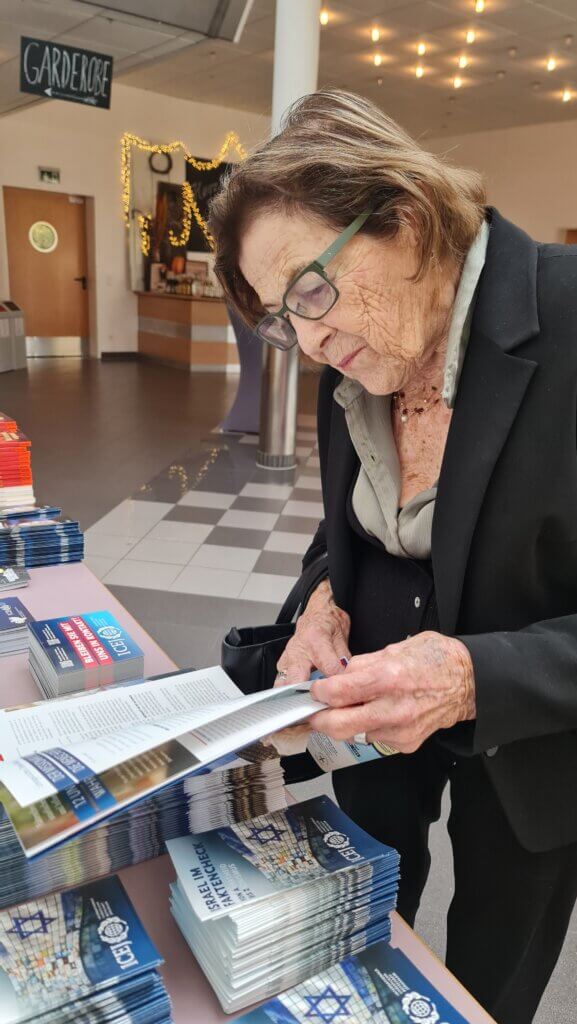
For years, Eva has shared her testimony at ICEJ events, particularly in Germany. During our latest tour in Germany, she spoke at schools and other gatherings, meeting students and adults eager to hear from someone who had lived through history herself.
Her purpose was not simply to recount the horrors of the concentration camps and the death march she survived as a teenager. She wanted people to understand what it means to be Israeli today, especially as antisemitism resurges across the Western world and Israel is so often misunderstood.
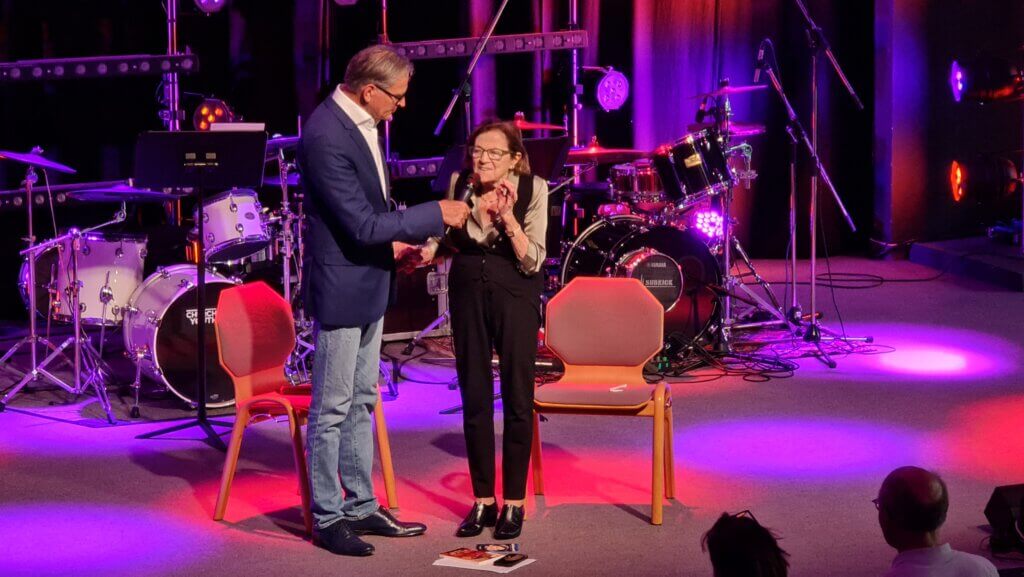
Gottfried Bühler, ICEJ-Germany’s national director, captured the significance of her message in these words: “‘I am Israeli’—these are prophetic words by Eva Erben.”
When Eva stood before young people, she spoke with remarkable openness and warmth. The students asked deeply personal questions: How had she endured such suffering at just 14? How had she coped with the loss of her mother? What had life been like after the war? And what did it mean to live in Israel today?
Eva answered patiently, turning what might have been a history lesson into an honest and moving conversation.
She knows firsthand where hatred, exclusion and the dehumanisation of others can lead. That is why the growing hostility towards Jews and Israel grieves her so deeply. She longs for people to look beyond the headlines, seek the truth and recognise the humanity of those they so readily judge.
Her message to the audience was direct:
“Your voice is important. Not only to pray but also to take action. Don’t be silent, but play an active role against the Jew-hatred that is poisoning Western societies.”
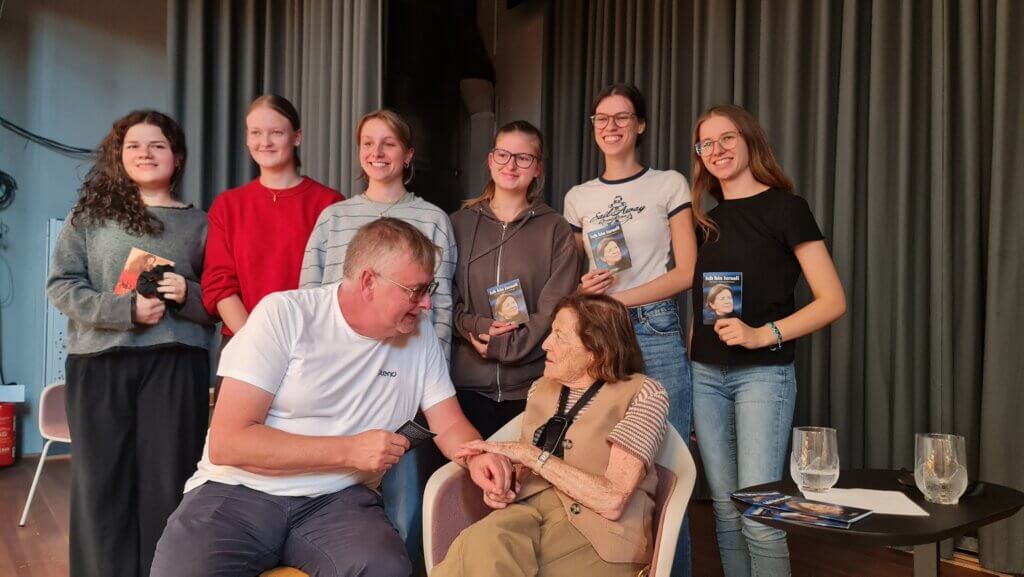
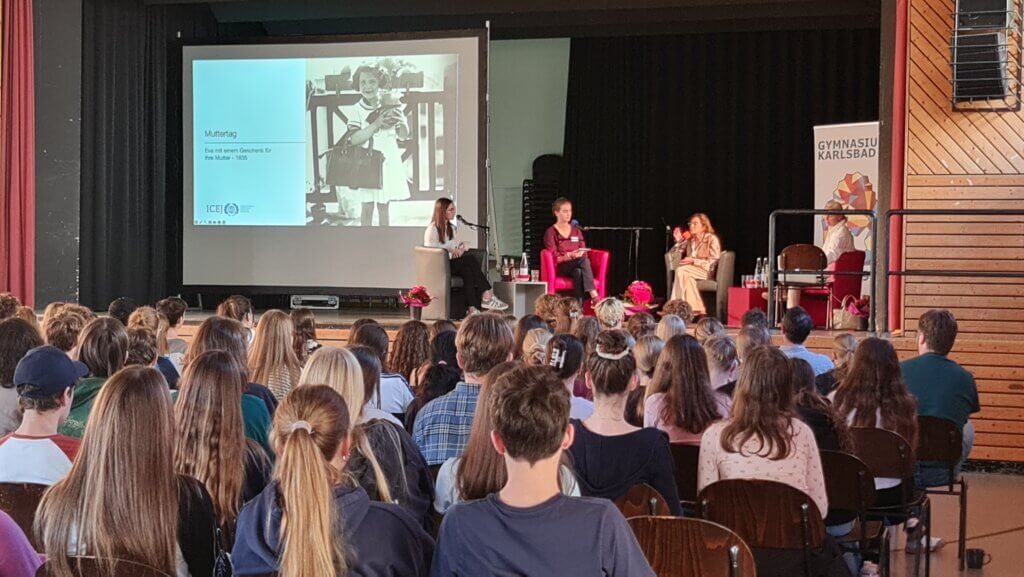
“Prayer gives you strength,” Eva said, “but you also need to face reality and take action.”
For Eva, remembering the Holocaust must mean more than repeating the words “Never again.” It must challenge us to ask what those words demand of us today.
“We need to respect each other, live together and to let live, with love and through the Ten Commandments,” she urged.
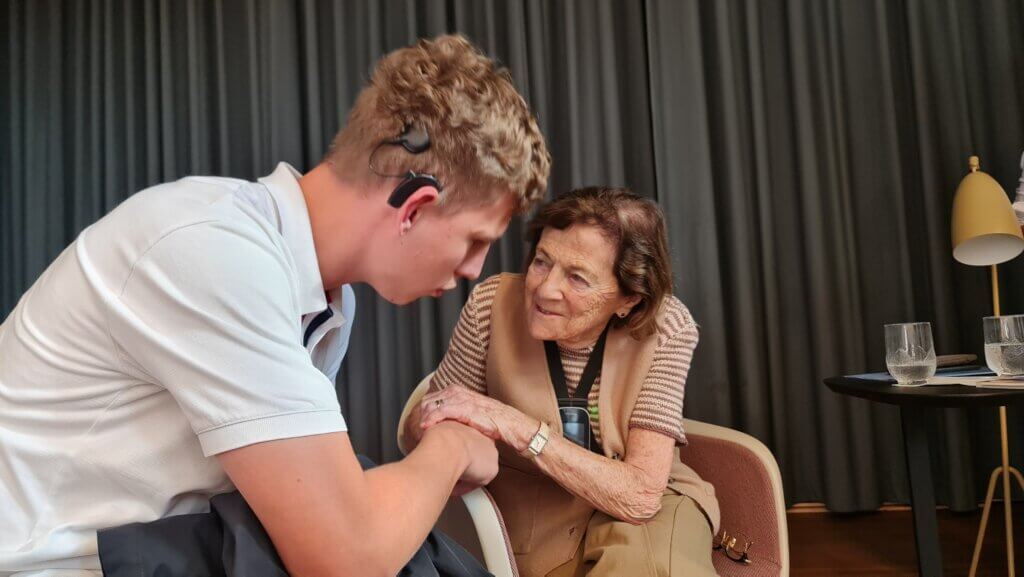
Despite everything she has endured, Eva refuses to let suffering have the final word. Her message to the younger generation is ultimately one of hope and responsibility.
“The greatest gift you get is life, treasure it and make the best of it. You only get it once.”
These words carry extraordinary weight coming from a woman who lost so much and nevertheless chose to build a new life.
Eva believes that much of the world’s hostility towards Israel stems from misinformation and a failure to understand what Israelis experience and desire. She wants people to look beyond political arguments and recognise that Israelis, too, long to live in peace.
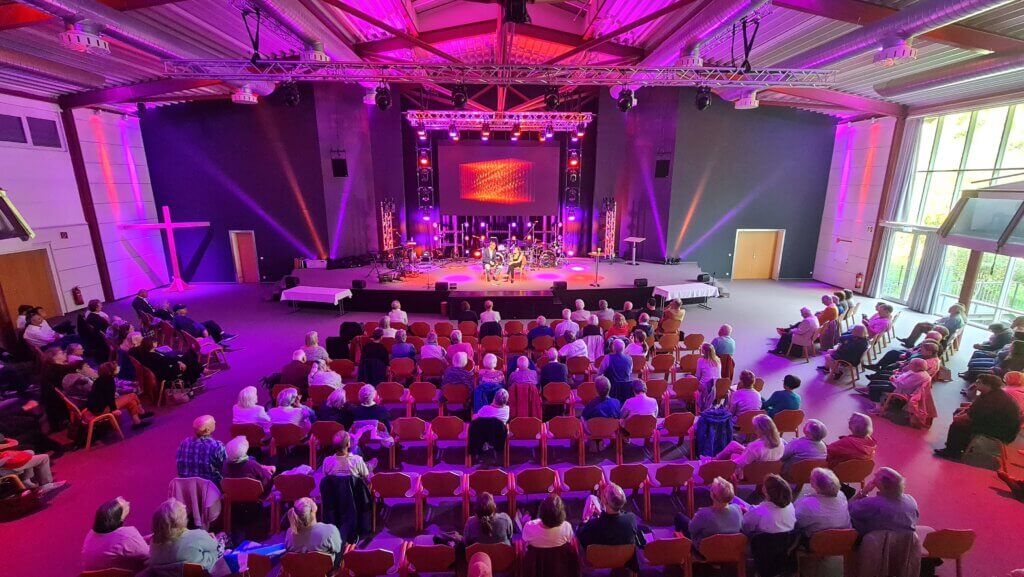
Her appeal is deeply personal, but its implications reach far beyond Israel. It challenges every listener to examine their own attitudes, question what they hear and refuse to stand by when others are treated unjustly.
At 95, Eva Erben continues to carry the memory of those who did not survive while speaking up for those living today. She does not want young people to inherit her fear or hatred. She wants them to inherit the courage to choose a different path.
And Eva’s message leaves us with a question we cannot easily dismiss: When hatred rises and truth is obscured, will we remain silent—or will we find the courage to speak and act?
Summary: To Be Israeli (by Eva Erben)
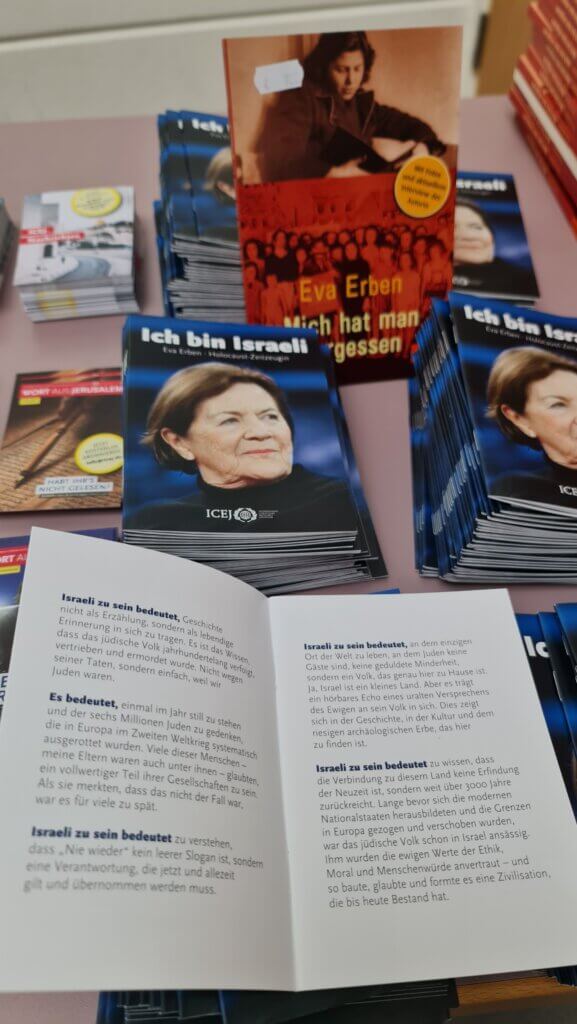
In much of the western mainstream media, Israel is often discussed in terms of conflict, policy and geopolitics. Yet the lived experience of being Israeli – its history, its fears, and its aspirations—is frequently misunderstood. To understand Israel, one must begin with what it feels like to live there, to be Israeli.
To be Israeli is to carry history not as a story, but as a living memory.
To be Israeli is to understand that “never again” is not a slogan. It is a responsibility, and it is now.
To be Israeli is to live in the only place in the world where Jews are not guests, not tolerated minorities, but a people at home
To be Israeli is to know that this connection is not a modern invention, but an ancient one.
To be Israeli is to return to that place after centuries of exile and rebuild it—not as a colony, but as a homeland.
To be Israeli is also to live in the present, where history is no longer distant.
To be Israeli is to face enemies who do not simply oppose policies or borders, but openly declare their goal: the destruction of your state and the elimination of your people.
To be Israeli is to hear these threats and believe them.
To be Israeli is therefore to draw a line: there are moments when moral clarity is required.
To be Israeli is to defend life in the face of those who celebrate its destruction.
To be Israeli is also to look outward and feel a deep sense of dissonance.
To be Israeli is to ask: how can this contradiction exist? And yet, despite all of this, to be Israeli is to love life.
To be Israeli is to want peace – genuinely, deeply. Not as a slogan, but as a reality.
To be Israeli is to hold both hope and resolve at the same time. Hope – for a future in which conflict is no longer the defining feature of life. Resolve – that until that future arrives, you will defend your people, your home, and your right to live in it.
To be Israeli is to ask for something simple, yet fundamental: to live in safety, in dignity, and in peace.