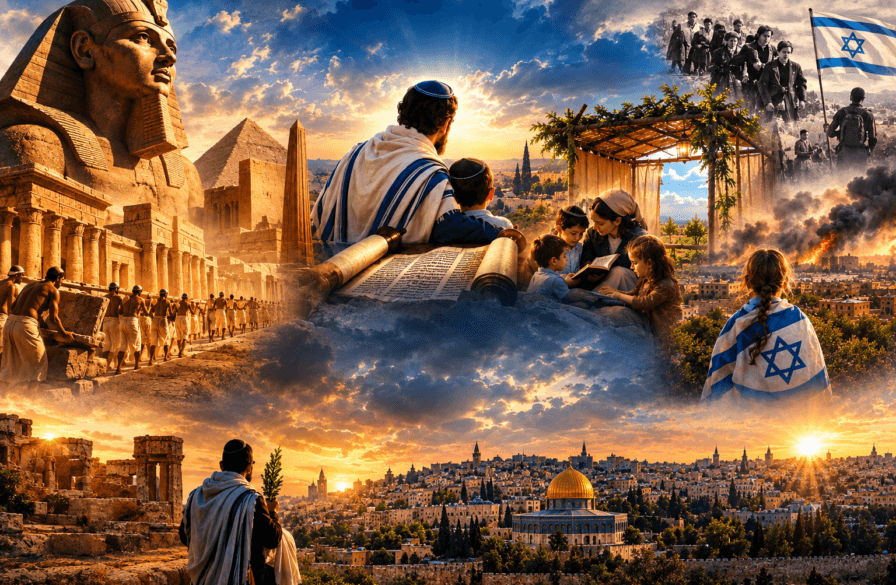
Building with Stone or Memories?
Published on: 15.10.2026By Ambassador George Deek, Special envoy of Israel to the Christian world, speaking at the Feast of Tabernacles.
Imagine travelling back 3,500 years to ancient Egypt, arriving at the palace of Ramses II, the Pharaoh of the Exodus, and standing before him with an extraordinary message.
“Oh, great Pharaoh, we come from the future, and we have good news and bad news. The good news is that one of the peoples living in your kingdom today will be alive and well three and a half thousand years from now. The bad news is that it won’t be you.”
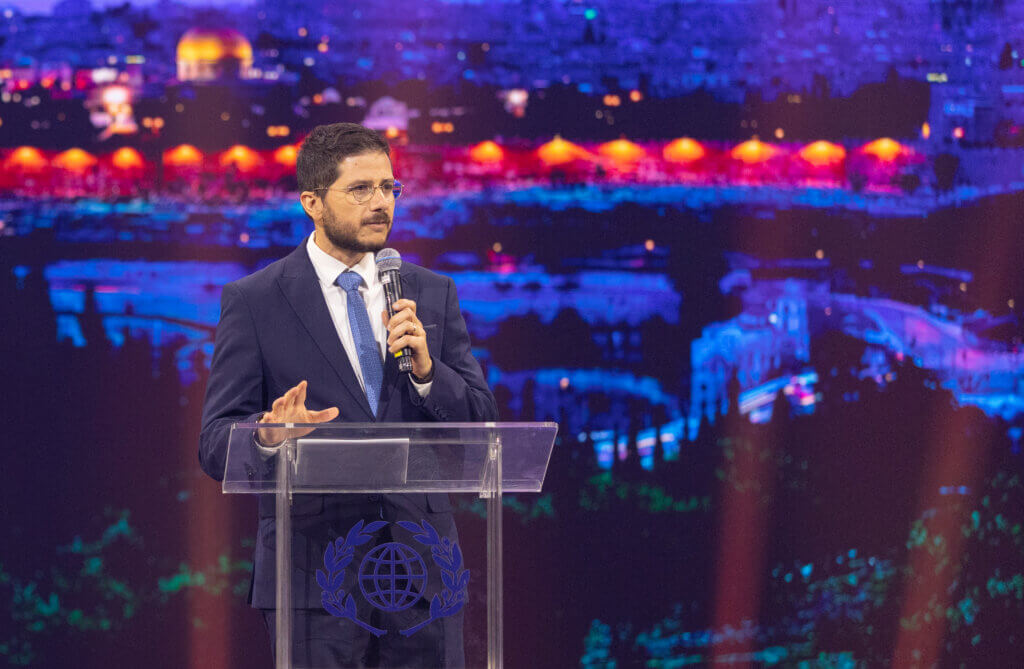
This was the intriguing scenario presented by Israeli Ambassador George Deek at the ICEJ Feast of Tabernacles 2026 in Jerusalem, as he explored one of history’s remarkable questions: How has the Jewish people survived for thousands of years while so many powerful civilisations have disappeared?
The Egyptian Pharaoh would probably have thought such a prediction insane. Egypt was a superpower whose armies dominated the region, whose kings commanded unimaginable wealth and whose civilisation produced extraordinary monuments. The temples, statues and pyramids of Luxor, Karnak and Abu Simbel still stand thousands of years later.
So Ramses might have asked: “If not Egypt, then who?” Imagine taking Pharaoh to his palace balcony and pointing down at the people carrying bricks, the Hebrew slaves, before giving him the astonishing answer: “Them.”
Egypt had everything that seemed necessary for immortality: power, wealth, armies and architecture. The Israelites had almost nothing. They had no state, no army and no land. Yet Egypt became one of the great civilisations of history, while the children of Israel became one of its great enduring civilisations.
Monuments of stone and memory
To explain this contrast, Deek drew on an insight from the late Rabbi Jonathan Sacks, who suggested that Egypt and Israel gave two different answers to the same question: How do you, as a nation, live forever?
Egypt’s answer was to build something so enormous that no one would ever forget it: pyramids, temples and statues. Israel had another answer: Build people, build families and build communities. Pass memory from parent to child, teaching each generation who they are, where they came from, what they are here to do and how they should live.
“Before Israel became a nation of soldiers, farmers, kings or statesmen, it became a nation of teachers,” Deek explained, suggesting that this may be one of the great secrets of Jewish survival.

“The Egyptians built monuments of stone. The Jewish people built monuments of memory.”
Egypt’s monuments still stand, but the civilisation that built them is gone. Israel’s great physical monuments, including the two Temples in Jerusalem, were destroyed centuries ago. Yet the Jewish people are still here, passing the memory of the Exodus from one generation to another.
Memory can cross deserts, survive exile and ghettos and endure even the destruction of Jerusalem. For two thousand years, Jewish parents continued teaching their children to say, “Next year in Jerusalem”, preserving a hope that outlived the empires that ruled over them.
“And tonight, my friends, we are standing in Jerusalem. The dream survived. The people survived. And the State of Israel lives.”
The fragile sukkah
Yet Jewish survival has never been easy. Across the centuries came expulsions, massacres, ghettos, inquisitions, pogroms and the Holocaust. Then, on October 7, 2023, history came knocking at Israel’s door once again. That morning, Israelis witnessed scenes they had convinced themselves belonged to another age: families hiding from murderers, communities overrun and parents desperately trying to save their children.
October 7 reminded Israelis that a home can be strong and still be vulnerable.
For Deek, this makes Sukkot particularly meaningful. The sukkah is a strange national symbol. It is neither a fortress nor a palace. Its walls are thin, and its roof allows those inside to see the sky. It is deliberately fragile. Yet once a year, Jewish families leave the security of their permanent homes to enter these temporary structures. Why?
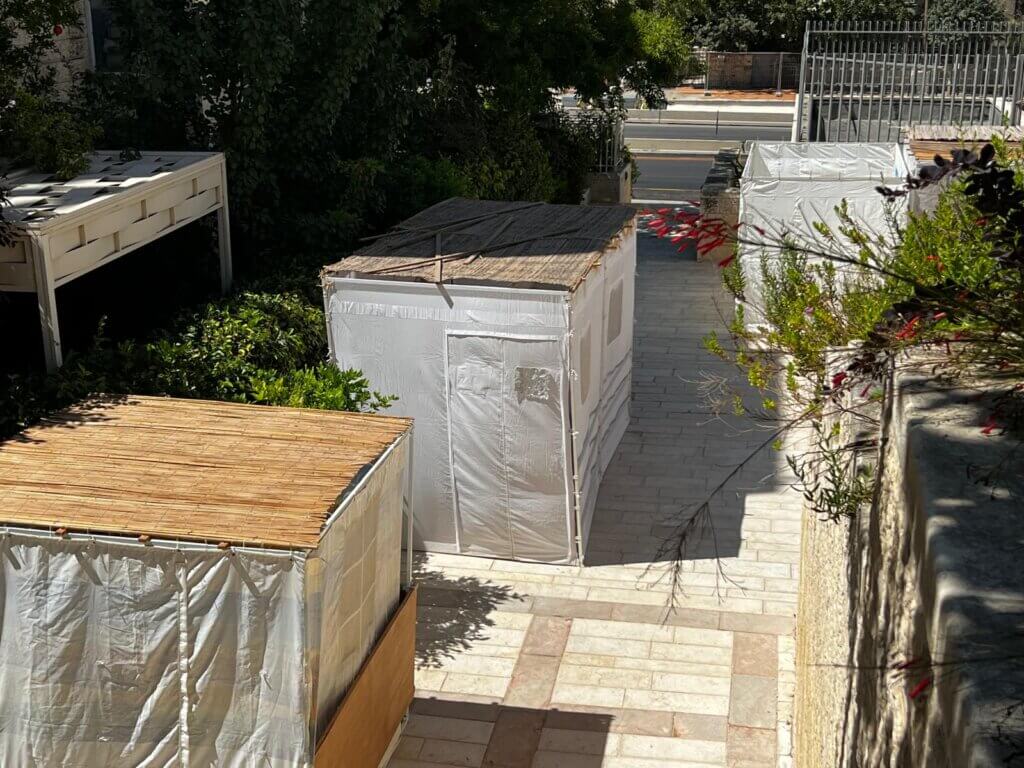
Jewish history offers an answer: Security does not come only from walls. The Jewish people have had walls before, and they fell. They have had kingdoms before, and they disappeared. They have experienced moments when they believed the danger had passed, only to discover that it had not.
The sukkah teaches that the secret source of strength is something no enemy can destroy: faith, memory and hope. This resilience has enabled the Jewish people to refuse to be defined by their tragedies. They are a people who bury their dead, bring their people home, defend their country and then rebuild.
A message to the nations
Addressing the Christian pilgrims gathered in Jerusalem, Deek thanked them for standing with Israel and encouraged them to carry something of Jerusalem home. “Tell the truth about this country. Stand against hatred. And help us build the future that generations before us could only dream of.”

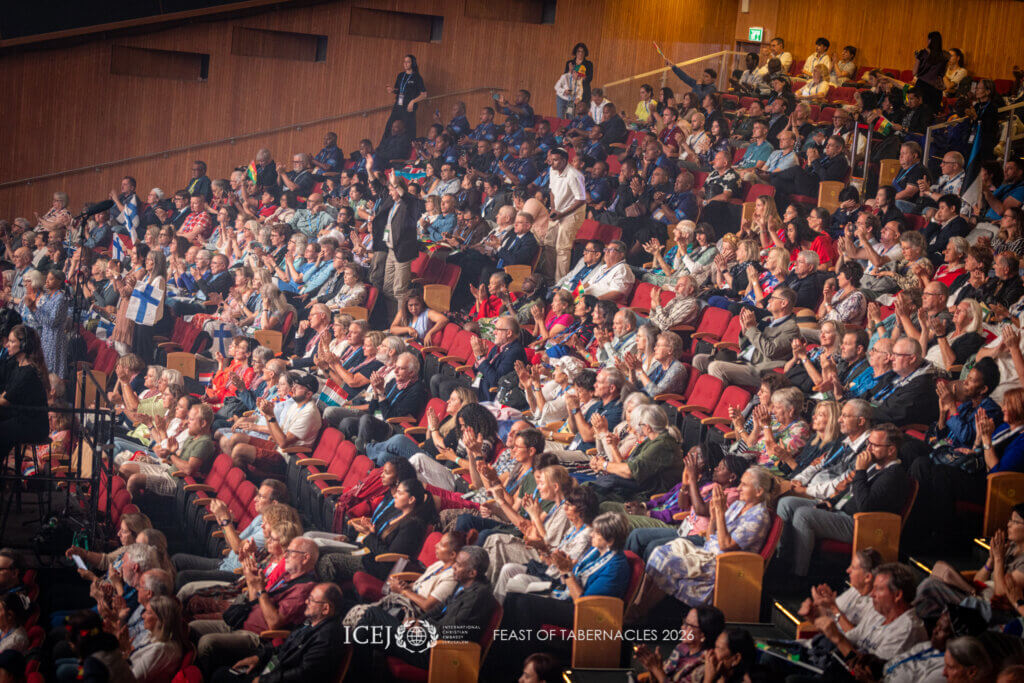
Returning to his opening image, Deek reminded the audience that 3,500 years ago, Pharaoh could have looked down from his palace at a nation of slaves and never imagined such a gathering in Jerusalem. Yet here they were, celebrating the survival of a people whose greatest monuments were not built of stone but preserved through generations of memory.
“The people of Israel live. Jerusalem lives. The nations have come. And the tabernacle still stands.”
Main image: AI-generated