The Story of Homecare
Published on: 11.3.2026By Corrie Van Maanen
“…that you may know the way by which you must go, for you have not passed this way before.” (Joshua 3:4)
Sometimes God leads His people into ways unknown. He reveals the first step along a certain path, and it is not until much later that we look back and see how He brought different paths together. That is the story of Homecare.
When the world witnessed the dramatic fall of the Iron Curtain in 1991, it also opened the gates for one million Soviet Jews to pour into their ancestral homeland of Israel.
Prophecy came true before our eyes. “Behold, I will bring them from the north country, and gather them from the ends of the earth. Among them the blind and the lame, the woman with child and the one who labours with child, together; A great throng shall return there.” (Jeremiah 31:8)
In response to the some 5,000 Jewish immigrants arriving per month, the ICEJ’s Soviet Jewry Department became an exciting new chapter in the Christian Embassy young history.
In addition, Dutch Christians volunteering in Israel recognised that the new arrivals had needs and initiated a program to offer basic nursing care to elderly new immigrants in their homes. In 1996, this God-given initiative was adopted by ICEJ under the same name of “Homecare” and became an essential ministry of our Soviet Jewry Department.
Thus, the pathways merged! The new ICEJ Homecare team was formed from Dutch and Finnish nurses who enjoyed a wonderful bond of unity in providing ongoing care for Russian immigrants, including the elderly, infirm, Holocaust survivors and young families.
As word spread that Christians from many countries were there to help, requests for assistance began to arrive. The ICEJ’s founding mandate of “Comfort, comfort My People,” found another practical means of fulfilment.
A car equals thankfulness
The Homecare team initially took the bus for our daily visits, which had its joys but took extra time. So, ICEJ-Finland eventually provided a vehicle for the nursing work, expanding our reach. The Homecare car became a key tool for extending Homecare’s ministry to many more Jewish homes nationwide. From weekly home visits in Jerusalem, we began to span Israel from north to south. For many elderly immigrants facing loneliness, our Homecare visits became a highlight.
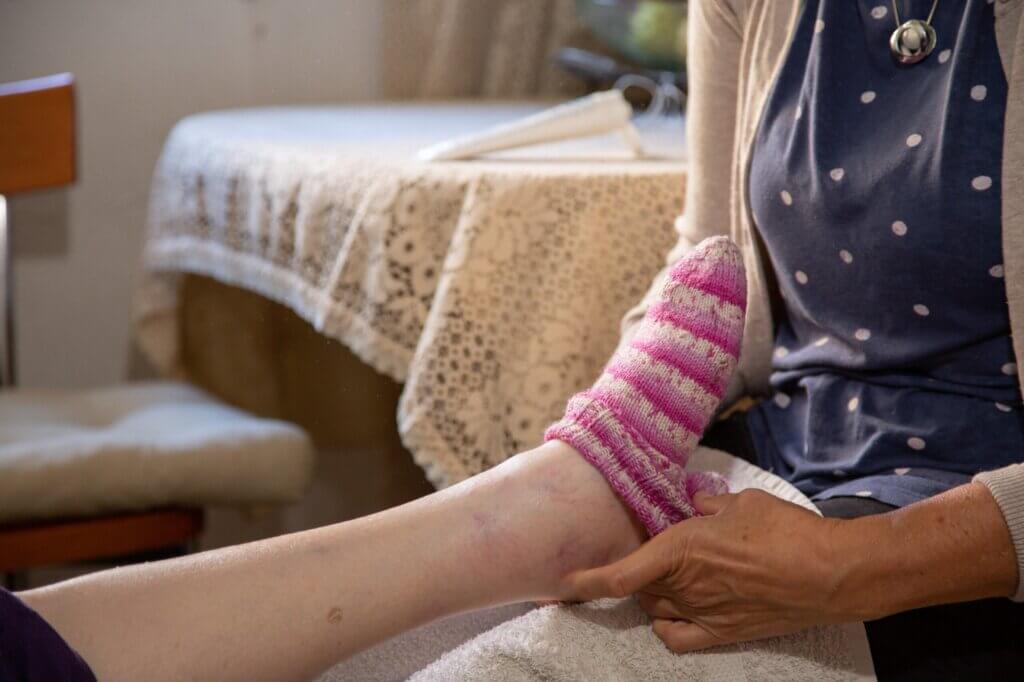
Starting my work in Homecare among Russian immigrants, I decided to begin learning Russian. It was not easy, but I experienced that language mistakes could bring a laugh and brighten up a lonely heart. I learned to trust the Lord to even use my mistakes for good. I also learned the language of our heart speaks the loudest – a language not of words, but deeds.
Since those humble beginnings, Homecare has been ministering with compassion, making a difference one life at a time!
“They didn’t help me out of obligation, but they helped me with the heart”, one lady from Ukraine said of ICEJ Homecare.
After 30 years of this work, choosing a favourite story is nearly impossible, as every person is special and every story is unique.
I remember weekly visits to a lonely, elderly Russian Jewish woman in a nursing home. One day, she told me about the war, as it was Liberation Day in Russia, marking the end of WWII. Her brother died as a soldier, and her grandparents were shot and buried in a mass grave. She has endured so much; who can comfort more than the Lord? When I asked, she said, “I know He does.” When I inquired further, she replied, “Because He sent you to me today.” Suddenly, the visit became more meaningful.
Sixteen years with Sara
The Homecare team also supported Sara and her mother for sixteen years. At first, they were withdrawn and trusted no one, only allowing foot washes before shower help. After the mother, an upright Jewish woman, died at 97, Sara was left deeply confused. They had lived together for 72 years. I continued to visit her in an elderly home, and she was always glad to see me.
Then suddenly, she fell ill and was hospitalised for several difficult weeks. One evening before she passed away, I sat by her bed, holding her hand and reflecting on our sixteen years. I felt Sara embodied the heart of Homecare, reaching out to the unseen. That night, Sara died and was buried, having fulfilled her dream of returning to Israel.
A full life for Sima
I also think of Sima, who lives together with her daughter in Jerusalem. It was a beautiful wintry day when I paid her a visit. I brought a few roses from the garden for Sima. When I entered, she was sitting by the kitchen table, and I felt welcome that she had been waiting for me. It was Sima’s birthday, and she was one hundred years old!
Sima was born in czarist Russia, before the Revolution of 1917. But she grew up under Communism, suffered in the Second World War, and was seriously ill. She knew what it means to survive with the daily worries of providing food for her family. Her husband died at a young age. At an advanced age, she came to Israel with her daughter.
Sima lived to enjoy the love of her children, grandchildren and great-grandchildren. When I asked her what made her the happiest in life, she did not need long to think. Where her children are, there she is happy.
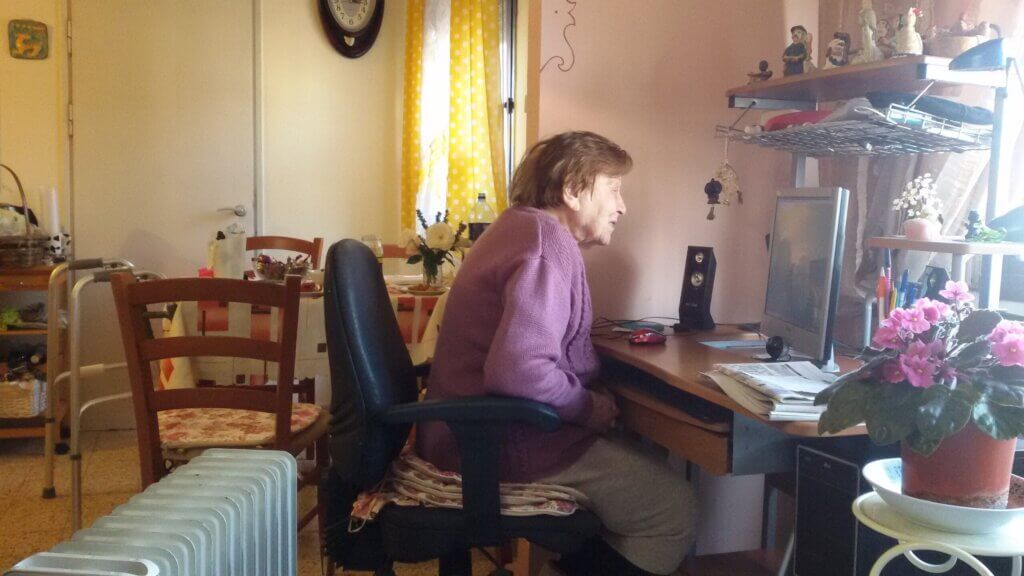
A bit later, the computer rang from someone calling her on Skype. She shuffled with her walker over to the computer and quickly entered an animated conversation with a nephew in Ukraine. From the Russian Revolution to a conversation by Skype in Israel, Sima has had a life full of experiences. Though she still struggles with Hebrew and paying bills on time, she feels at home in Israel. And I am often aware how our Homecare work is woven in with the incredible life journeys of those we care for and their life-changing Aliyah to the Jewish homeland.
Shlomo, the lone survivor
Every week, I also visit an elderly couple in a Jerusalem suburb where many Russian Jews live. It usually takes a while before the door opens. The room is dim, as the shutters are normally closed to keep out the sun. Their furniture is old. Shlomo’s prayer vest hangs from a hook. Shlomo has poor vision, but proudly says he knows 80% of the Jewish prayer book and still goes to synagogue daily.
The war deeply wounded him at a young age. During one visit, he wanted to tell the story of his family of eight children, each with biblical names, but only he survived the war. Tears fell as he spoke, and his wife gently urged him to quiet down, saying it upsets him. I listened and trusted he would be comforted by an attentive ear. With ICEJ support, I brought a nutritional supplement which they cannot afford. When I left, Shlomo called me a “shaliach b’shemo,” a messenger of God. I was silent. There is little I can do for them, yet it means so much.
Maria and the mice
I once visited a single Russian mother who lives with her children in a poor neighbourhood along Israel’s coast. Maria knew I was coming and was happy to see me. It took a moment to get used to the clutter – no closets, just piles of folded clothes against the grey walls, paint peeling from the ceiling. A cat slept close to Maria on the couch.
“This one is good at catching mice,” she said. I asked, “Did you have trouble with mice?” She shook her shoulders in disgust, insisting “It was awful.”
Maria felt ashamed about her appearance and dire situation. Comfort comes not with words or advice but by sharing tea, with the cat on the couch, and stacks of clothing against the wall. I listened to her story, to her heart and her needs.
Homecare has paid toward dental treatment for Maria, and she said she is beginning to feel human again. Her self-respect is returning, and she has begun to bring order to the house. Hope is rising in a situation that seemed so helpless.
Holiday gifts from the heart
Another meaningful aspect of our Homecare work is to remind these elderly immigrants of their Jewish heritage. Coming from a communist system, many had been cut off from their faith and arrived in Israel knowing little about the Bible. During the Jewish holidays, we have touched many lives with our personal delivery of special gifts, traditional food items, and a beautiful card with a Bible verse. Some keep those cards and bring them out in lonely moments.
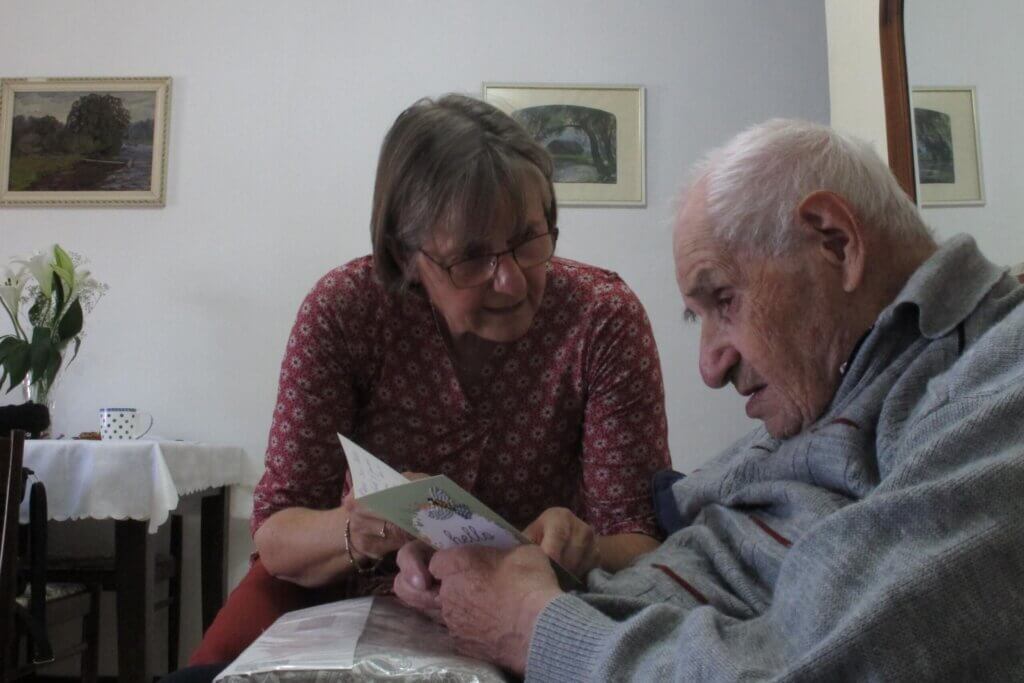
When Noam, a survivor of a ghetto and concentration camp, received a supermarket voucher and holiday card last year, he carefully examined them and said, “The voucher is a help for me, but the card touches my heart.”
There are many more stories to tell about ICEJ Homecare’s impact in brightening the lives of the elderly and infirm immigrants under our care. Please support this vital ministry in prayer and by donating below.