The Jerusalem Summit: A Call to Clarity in a Critical Hour
Published on: 11.3.2026By Dr. Jürgen Bühler, ICEJ President
We are living through one of the most decisive moments in the modern history of the Church. Since October 7, the world has changed. Across Europe, North America, Latin America and beyond, we have witnessed a surge of antisemitism at levels unseen in generations. Jewish communities feel vulnerable again. Hatred that once hid in the shadows now marches openly in the streets. Israel is judged, isolated and delegitimised—not only politically, but morally and theologically.
In some nations and even in many churches, the word ‘Zionism’ has become a pejorative term. According to the Oxford dictionary, Zionism is “a movement for the re-establishment of a Jewish nation in Palestine (Land of Israel) and the development and protection of Israel.” Today, however. it is globally branded as racism and apartheid. Yet Israel is anything but an apartheid system. It is the most democratic and diverse nation in the Middle East.
The whole concept of Zionism is biblical in its origin. It goes back to the very first restoration movement of the Jewish people in Babylonian exile, when the Psalmist sang: “By the rivers of Babylon, there we sat down, we wept, when we remembered Zion.” (Psalms 137:1) Zionism is the ancient belief and hope of the Jewish people that God will always bring them back from exile to their ancestral homeland, according to His promises in the Bible. But this enduring hope and belief has come under attack.
The prophet Isaiah declares, “For the Lord has a day of vengeance, a year of recompense for the cause of Zion (Isaiah 34:8/ESV).” The King James Version translates this verse as “a year of recompenses for the controversy of Zion”. We live indeed in a year of controversy about Zion, as the millennia-old hope for a Jewish homeland in Israel is under assault worldwide.
While Israel’s future is affirmed by countless biblical declarations, many in the Church are silent and indifferent about the current global wave of antisemitism, uncertain about what the Bible has to say on the Jewish return, or – worst of all – stridently opposed to Zionism.
Isaiah also once cried out: “For Zion’s sake I will not keep silent, and for Jerusalem’s sake I will not be quiet, until her righteousness goes forth as brightness, and her salvation as a burning torch.” (Isaiah 62:1) In times of moral confusion like now, silence is never neutral. Christians are looking for answers and direction in these days, and it should be found in the church of the living God – which Paul describes as “a pillar and buttress of the truth” (1 Timothy 3:15). But in far too many churches, Israel and antisemitism and the irrevocable calling of the Jews are ignored altogether. We cannot be silent anymore!
This is why the ICEJ is urgently convening the Jerusalem Summit!
From June 9-11, we will gather in Jerusalem an array of noted Christian leaders, theologians and scholars from around the world to address the burning issues of the current surge of global antisemitism, the historic roots of anti-Jewish views within the Church, and the theological apathy and opposition surrounding Israel’s restoration today. We want to provide Christian leaders and laymen the biblical answers they need to stand up to these daunting challenges now at hand.
Confronting the Global Rise of Antisemitism
Love for Jerusalem is not a sentimental emotion, it is a biblical responsibility based on God’s eternal covenant and calling of Israel. Revelation chapter 12 describes how a demonic attack would be unleashed against the woman, depicting Israel. This satanic dragon of hatred has many heads. It can pose as an Islamic fanatic, a university professor, a politician on the left or right, or even a clergyman of the church. The result is seen today in synagogues that must adopt heavy security measures, Jewish students feeling unsafe on university campuses, and old antisemitic conspiracy theories reappearing in new cloaks that are even peddled by conservative influencers.
The Church cannot live in confusion in such a moment. Revelation 12 also tells us that in the end the Dragon also attacks those who have the testimony of Jesus. It means those doing his bidding will first go for the Shabbat people then the Sunday people. The Apostle Paul also reminds us in Romans 11 that Gentile believers in Jesus have been grafted into Israel’s olive tree. Thus, if the natural branches suffer, how can the grafted branches remain indifferent?

We must equip Christian leaders with theological clarity and moral courage to address antisemitism – not just as a political issue, but as a challenge to the spiritual health of the Church itself, lest we end up cursed and cut off from God’s redemptive purposes. Antisemitism has always been more than prejudice. It is resistance God’s sworn covenant promises. It is an attempt to delegitimize the people through whom God chose to reveal His Word and bring forth the Messiah. If the Church remains silent in this hour, we risk losing our prophetic voice altogether.
Addressing the New Pauline Perspective and other forms of Replacement Theology
For centuries, various theological frameworks have arisen that subtly – or openly – severed the links between the Church and Israel. Replacement theology has taken many forms. In our time, it often appears in more sophisticated academic language, including what is known as the “New Perspective on Paul.”
Academic discussions have their place. Yet when theological viewpoints lead to the conclusion that God’s covenant with Israel has expired, or that the Jewish people no longer have a distinct calling in God’s redemptive plan, we must return to Scripture itself. Paul asks in Romans 11:1, “Has God rejected His people? By no means!”
This is not a minor footnote. It is central to the integrity of the Gospel. The faithfulness of God to Israel is inseparable from His faithfulness to the Church. If God’s covenant promises to Israel can be spiritualised away, what assurance remains for the Church?
The Jerusalem Summit will provide the scriptural foundations for affirming Israel’s enduring covenants, divine election, and Land promise from both Old and New Testament perspectives. We seek to help pastors and other church leaders to responsibly teach clear biblical truths in these days.
Revisiting the Nicaean Council as a Turning Point in Church History
Last year marked 1700 years since the First Council of Nicaea, which was a defining moment in Church history. While it clarified essential doctrines concerning the divinity of Jesus, it also cemented the separation of the Church from its Hebraic roots. After Nicaea, this rift between the established churches and the Jewish people only grew.
Most markedly, while the Nicaean Council of 325 AD arrived at powerful truths on the divinity of Jesus, it lacked any recognition that our faith was rooted in the patriarchs and prophets of Israel. The biblical feasts were discarded and replaced by a new Gentile calendar. In a letter to the churches from Nicaea, Constantine proudly declared: “We ought not, therefore, to have anything in common with the Jews… We desire, dearest brethren, to separate ourselves from the detestable company of the Jews…”
The Jerusalem Summit will revisit these historical church decisions and seek to amend certain theological errors concerning the Jewish people. While the Nicaean creed should be fully affirmed regarding the divine nature of Jesus, we will propose an updated creed that affirms the Jewishness of Jesus.
Why Jerusalem?
Jerusalem is not merely a geographic location, it is the crossroads between heaven and earth. Jerusalem was the epicenter of the original church in New Testament times, and it is appropriate to hold such a council again in Jerusalem to resolve issues that are shaking and challenging the Church today. While this gathering is being convened on relatively short notice, the issues are urgent and do not allow for delay. In a recent Global Prayer Gathering, our sister Christine Darg compared the Church with a sick body that is haemorrhaging and needs immediate medical attention. This is true even for many Evangelical churches. And Jerusalem is the emergency room for fixing it.
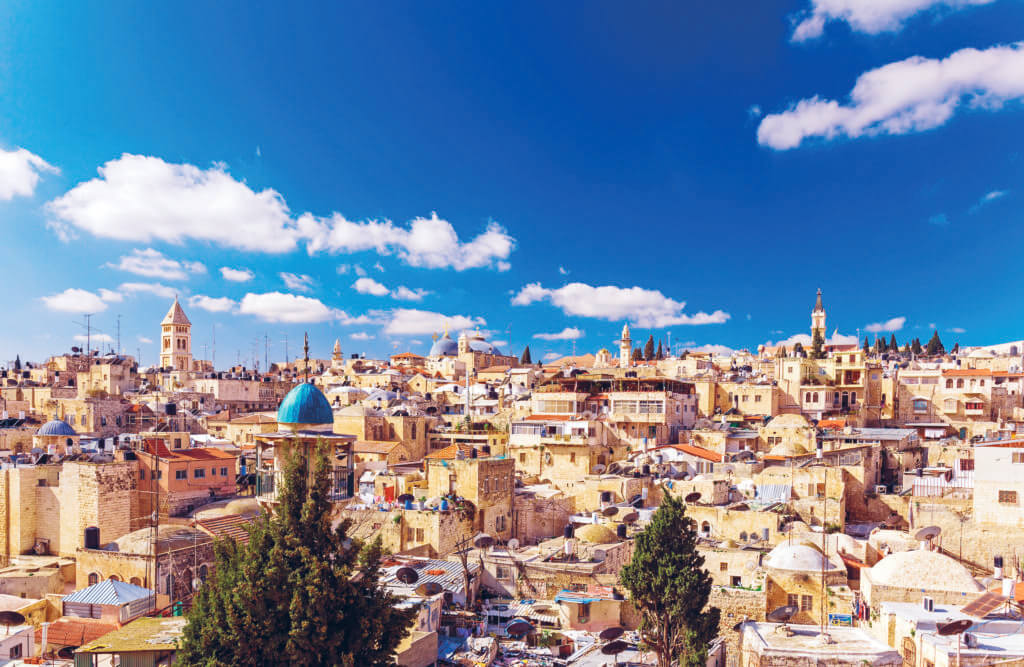
Jerusalem is where heaven meets earth. God placed His name here forever, and all the redemptive acts of history have and will play out in this city. We trust that God will speak in this critical time through faithful Bible teachers and theologians.
A Historic Responsibility and Opportunity
If you are a pastor, theologian, ministry leader, educator, or if you simply care about Israel and the Church today, then this is your time to come to the Jerusalem Summit. The issues we face will not disappear through avoidance. They require biblical depth, historical awareness, and spiritual courage.
Today, the credibility of the Church is at stake and Jerusalem is the place for you to come engage, take action, and change the destiny of your church and nation concerning Israel. So, join us this coming June.
I look forward to welcoming you at the Jerusalem Summit!