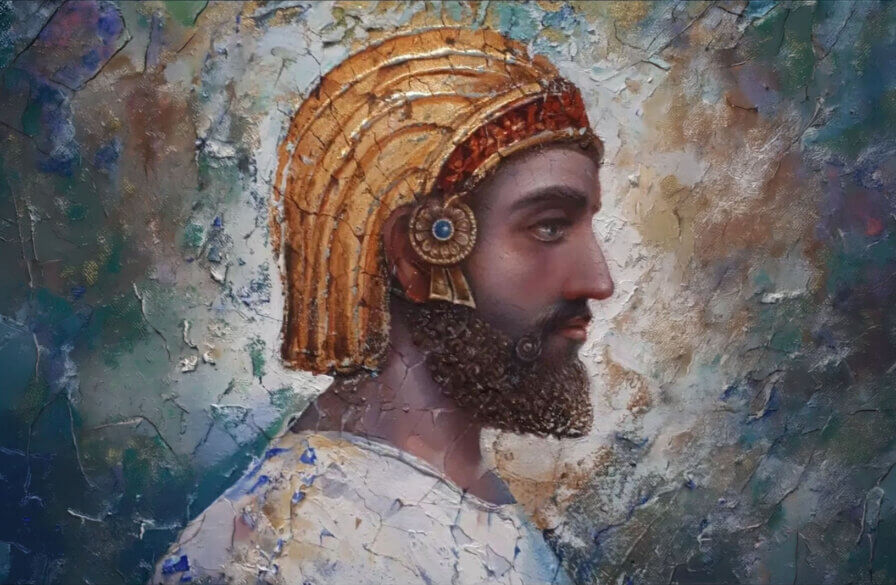
The Cyrus Anointing
Published on: 13.3.2026By Dr. Jürgen Bühler, ICEJ President
In the book of Isaiah, one of the most remarkable prophecies of the Bible is found. Isaiah speaks about a coming Gentile ruler named Cyrus, who would become a central instrument in the redemption of Israel. God calls him by name long before his birth and appoints him to fulfil His purposes concerning Israel and their restoration. It took 150 years for this prophecy to be fulfilled when Cyrus the Great rose to power, becoming the most legendary ruler of ancient Persia.
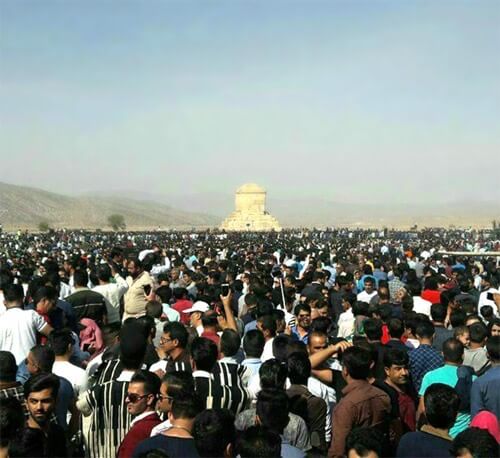
Amazingly, Cyrus the Great remains today one of the greatest unifying figures among Iranians who do not identify with the current regime in Tehran. To this day, Cyrus’s tomb remains a pilgrimage site for Iranians longing for freedom and change.
The ancient Persian king, who ruled from 559–530 BC, united the Persian and Median kingdoms into a mighty empire stretching from Greece, Turkey, and Babylon far into the eastern Elamite regions.
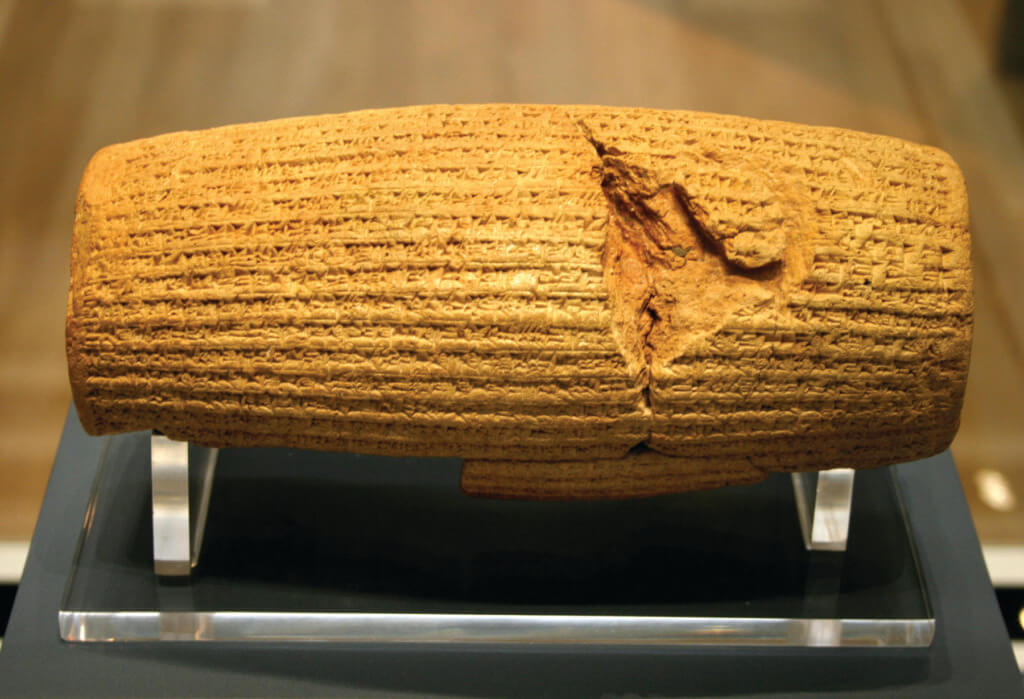
He is remembered as a leader known for unusual tolerance and benevolence toward minorities and non-Persian peoples under his rule. He allowed—and even encouraged—many displaced nations to return to their lands of origin, from which the Babylonians had taken them captive. He also financed and supported the rebuilding of their religious shrines. This is documented in two ancient sources: the Bible and the Cyrus Cylinder, discovered in 1879 in Babylon. Some regard the Cyrus Cylinder as the first declaration of human rights, and it can be seen today in the British Museum in London.
Throughout history, Cyrus has represented for the Persian people a unifying national figure who embodied ethnic and religious tolerance—qualities directly opposite to those of the current clerical regime in Tehran. Yet the Bible helps us understand that these unique traits were not merely personal attributes but were placed within him by God.
The Bible focuses on the Jewish people under his rule, especially the decree of Cyrus permitting the Jews to return to the Land of Israel and rebuild the foundations of the Temple in Jerusalem, which had been destroyed by the Babylonian king Nebuchadnezzar. Cyrus therefore played a crucial role in the restoration of the Jewish people at the end of the Babylonian exile. God had appointed him for this purpose—even before he was born. This divine calling to help the Jewish people also became a blessing to many other minorities in Persia.
The first biblical mention of the name Cyrus appears in Isaiah 44:28: “who says of Cyrus, ‘He is my shepherd…’” This sentence concludes a series of statements that began five verses earlier, where God repeatedly declares who He is: “I am the Lord … who made all things, who alone stretched out the heavens, who spread out the earth by myself…” After eight such declarative “who” statements, God concludes with, “who says of Cyrus…” This is remarkable, demonstrating that it is an essential aspect of God’s nature to intervene in world affairs to accomplish His purposes. God raised one of history’s most prominent leaders, granting him treasures and victories (Isaiah 45:1–3), and ultimately leading him to assist with the restoration of Israel.
This reflects the same understanding of God’s sovereignty found in the Book of Daniel, where we read that God “changes times and seasons; He removes kings and sets up kings” (Daniel 2:21). The New Testament likewise proclaims Jesus as “the ruler of the kings of the earth” (Revelation 1:5), “King of kings” (Revelation 19:16), and the Lord who “made from one man every nation of mankind … having determined allotted periods and the boundaries of their dwelling place, that they should seek God” (Acts 17:26–27). God is actively involved in the history of mankind for the purpose of world redemption. And because He is the Creator of the heavens and the earth, He will fulfill His purposes on earth. Again and again in Isaiah, God introduces Himself as Creator (Isaiah 40:26; 42:5; 44:24: etc), Lord over time (declaring the end from the beginning, Isaiah 46:10), and the ultimate source of wisdom (Isaiah 40:14ff).
Strikingly, these prophetic passages reveal that God placed a divine calling upon a ruler who never seems to have come to faith in the God of Israel. Twice God declares, “I call you, though you do not know Me” (Isaiah 45). Yet God gives this imperfect ruler titles in a language normally reserved for Israel or, later, the Church. God calls this Gentile ruler “My shepherd,” indicating that he will care for God’s people. He also commands the rebuilding of Jerusalem and the laying of the Temple’s foundations. God even grants him the prominent title “My anointed,” meaning God’s Spirit was at work through him—even though “you do not know Me.” What an extraordinary calling for a Gentile ruler!
Although the scope of Cyrus’s calling is unmatched in history, we do see throughout the ages that other Gentile leaders have arisen with a similar “anointing” to stand with the Jewish people at crucial moments. One example is Lord Arthur James Balfour, the British foreign secretary who issued the Balfour Declaration of 1917, calling for a national homeland for the Jewish people in what was then called Palestine.
Yet not only government officials but also ordinary individuals have carried this “Cyrus calling,” working for the physical and spiritual restoration of Israel. One such figure was Rev. William Hechler, a German clergyman and chaplain at the British Embassy in Vienna in the late 19th century. He helped Theodor Herzl understand the prophetic significance of his mission and used his connections to secure meetings for Herzl with kings and rulers of Europe.
On another level, countless intercessors around the world carry this same Cyrus-like burden before the King of Kings, praying for the restoration of Israel.
Today, as events in the Middle East continue to unfold, many see the United States as Israel’s closest ally in the modern era. In recent years, the U.S. administration under President Donald Trump has taken significant steps such as opening an embassy in Jerusalem for the first time since 1980 and recognizing the Golan Heights as part of Israel. These actions have been viewed by Israeli leaders as historic expressions of support. Till now, six other nations have followed the US by opening their Embassies in Jerusalem.
Today the US administration is confronting the nerve center of Middle Eastern terror—the Shi’ite mullah’s reigning in Tehran. Should this effort succeed, the region may have the greatest opportunity in decades to move toward more peaceful days, as the head of the terror “octopus” would finally be addressed. Israeli politicians widely agree that, without question, Donald Trump has done more for Israel than any other state leader in recent history and consider him thus a Cyrus for our time.
In our Global Prayer Gatherings, we have been praying for Iran, that God would raise up a Cyrus-like leader who will shepherd His people with justice, restore long-lost freedoms (especially for the Church in Iran), and establish peaceful, productive relations with the Jewish state rather than supporting terrorism and nuclear annihilation against her. May God indeed raise such a leader.
Let me encourage you to pray for your own nation, that God would raise up leaders who stand clearly and openly with His purposes for Israel. Pray for the Church in your country, that God would anoint leaders who are true shepherds for both the Church and the Jewish people. And finally, ask God to use you within your own circle of influence to work for the good of the people of God.
The historian Josephus explains why King Cyrus acted in such extraordinary ways to support the Jewish people. According to him, it was the prophet Daniel—who had access to Cyrus’s court—who read him the prophecy of Isaiah written 150 years before his rise to power. This caused Cyrus to act. Likewise, William Hechler presented the Bible to Herzl and the rulers of Europe to advance the Zionist cause with great success.
Pray with us that in our days many more Cyruses may arise who challenge the avalanche of antisemitism, stand with Israel, and care for the spiritual restoration of God’s people.
Main Photo: Relief of Cyrus the Great (Wikimedia Commons/Diego Colle/AI Generated image)