Remembrance, Resilience and Hope
Published on: 24.2.2026How Christians are standing with Holocaust Survivors
Here is the latest update from the ICEJ team at our Home for Holocaust Survivors in Haifa.
International Holocaust Remembrance Day
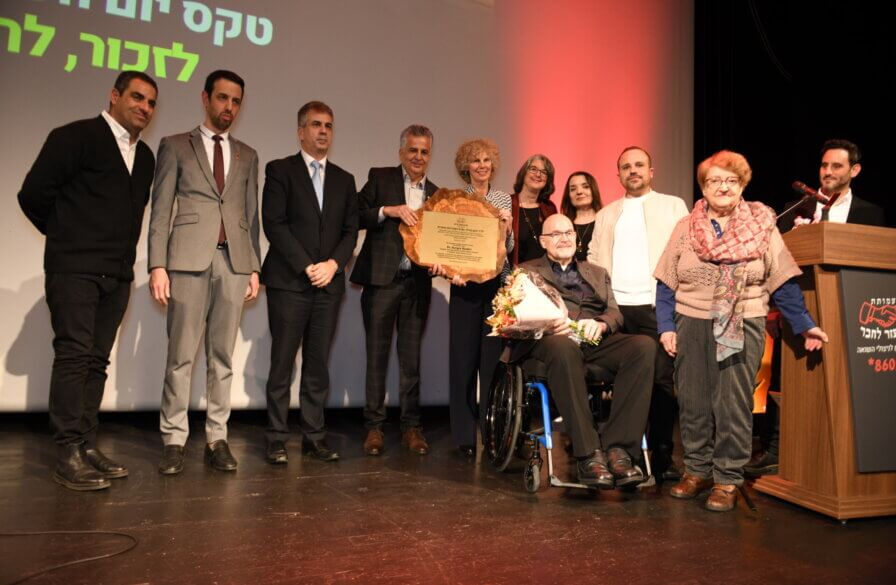
The 27th of January marked the 81st anniversary of the liberation of the Auschwitz-Birkenau death camp in Poland. As the world paused on this UN-designated day to remember the six million Jewish victims of the Shoah, the ICEJ Haifa Home for Holocaust survivors marked the occasion with a deeply moving ceremony at a local cultural center.
As we arrived, a bus full of our residents entered the event hall. It was a powerful scene to see these Holocaust survivors, many now using walkers or leaning on the arms of young volunteers, sitting together in conversation. These are the faces of people who survived the ghettos, the camps, the death marches, and much more. You could see them leaning toward one another, speaking in Hebrew, Russian and Yiddish, sharing a bond that few others can fully understand.
They were joined by a large, diverse crowd. Next to the survivors were young IDF soldiers, local schoolchildren, and families spanning several generations. Dignitaries and officials, including Israel’s Minister of Energy, Eli Cohen, and representatives from various foreign embassies, also filled the room.
The program was a solemn event, including traditional memorial prayers. The speakers at the podium did not just look back to the dark times of World War Two, they also spoke with urgency about the current global climate. A primary focus of the evening was the sharp rise of antisemitism worldwide. For the survivors listening to these speeches, these were not abstract concerns, but reminders of the same hatred they witnessed decades ago. Despite the heavy subject matter, the presence of so many different groups standing in support of the Holocaust survivors created a powerful atmosphere of solidarity.

At the end of the ceremony, there was a special presentation honouring ICEJ President Dr Jürgen Bühler for the Christian Embassy’s decades of dedicated care for Holocaust survivors. In his response, Dr. Bühler drew from that week’s Torah portion in Exodus 17.
He recalled how Joshua fought the Amalekites while Moses held up the staff of God. As long as Moses’ hands were raised, Israel prevailed; when they grew heavy, the enemy gained the upper hand. Aaron and Hur stepped in to support his arms until the victory was won.
“We as Christians represent Aaron and Hur,” Dr. Bühler shared. “We are here to hold up the hands of Israel in prayer and practical support as they face those who seek their destruction.”
The ceremony closed with elementary school children on stage and the rest of the audience singing Israel’s national anthem HaTikvah (“The Hope”). Their young voices acted as a soothing balm, reminding everyone that the people of Israel are indeed alive, and we are privileged to witness God’s faithfulness to His Word in our time.
“I Am Not Alone”
Returning home that evening, the residents were weary but visibly moved. For many, like Naomi, the greatest gift was the realisation that they are not forgotten.
“It is such a privilege to live here and not be alone,” Naomi shared as she was escorted back to her apartment. “To have a community of friends, shared meals, and staff who care for us in every way… I feel truly blessed.”
Some Facts on Holocaust Survivors:
As of January 2026, there are 111,000 Holocaust survivors currently living in Israel (Ministry of Welfare).
Israel is home to just over 50% of the estimated 196,000 Holocaust survivors still alive worldwide.
Some 37% of Holocaust survivors living in Israel come from the former USSR.
The average age of Holocaust survivors today is 87-88 years old.
Hope and Healing Beyond Surviving
The trauma of the Holocaust did not end with the Allied liberation of Nazi camps. Its scars remained deeply embedded in survivors and were often passed down to the next generation. Research shows that many children of survivors bear invisible wounds, higher levels of anxiety, depression, and even PTSD, shaped by growing up in homes marked by loss, fear and survival.
At the Haifa Home, we see this reality every day. Yet we also witness something powerful: when survivors are surrounded by dignity, joy and a loving community, there is healing that extends far beyond them, touching their children and grandchildren as well.
Noa Eldar Zakai understands this deeply.
Once a week, Noa leads music-based movement sessions for our residents using the Ronnie Gardiner method of rhythmic exercises that activate the body and the brain.
“Every time they finish, they leave smiling,” Noa told us.

Noa’s love for Holocaust survivors is deeply personal. Both her parents survived – her father by fleeing Yugoslavia, her mother emerging from Auschwitz. She was only 17 when she was deported to the camps. None of her family returned.
Although Noa’s parents rebuilt their lives in Israel, the trauma never fully loosened its grip. Her mother battled deep depression for years and died by suicide when Noa was only ten.
“It left a hole in my life,” Noa shared. “I was angry, jealous of families that felt normal – and heartbroken for what my mother endured.”
Years later, a visit to her parents’ hometown with her father and older sister revealed stories of her mother’s courage and strength, but also of the unspeakable atrocities she endured in Auschwitz.
This past summer, Noa began working at the Haifa Home.
“I had lived in Haifa for years and never knew this place existed. It opened a whole new world for me,” she said.
What struck her most was the very concept of the Haifa Home. On one hand, residents living along a few adjoining streets in Haifa, in their own homes, are able to enjoy conversations with different younger neighbours, hear children playing and laughing daily in nearby schools, see cats wandering the streets, celebrate birthdays, share holidays, and be embraced with genuine love. This stands in stark contrast to many of the fancy, expensive elderly homes, where senior citizens have everything but are completely cut off from society.
In our case, the concept of an Israeli charity working closely together with a Christian ministry representing foreign Gentiles – the ICEJ – has amazed her in many ways.
“Discovering that Christians around the world love Israel and stand with us has filled me with hope”, Noa related. “As an Israeli Jew, I always believed that everyone hates us, so it gives me much joy that there are Christians who love Israel. I can only hope that there will be more people like you who will not hate us so much and understand us a bit more.”
“After the trauma of the recent war, I understand without a doubt that my place is in Israel”, she continued. “The survivors continue to strengthen me in this belief and understanding despite all the wars and difficulties.”
By caring for Holocaust survivors with compassion and dignity, we are not only honouring the past, but we also are helping to heal generations.
Tu BiShvat – The Jewish New Year for Trees
The Jewish holiday of Tu BiShvat falls on the fifteenth day of the Hebrew month of Shvat and is celebrated in Israel by planting trees and enjoying dried fruits, a beautiful reminder of renewal and God’s provision through the land. It is still mid-winter in Israel, but the life of Spring is not far behind.
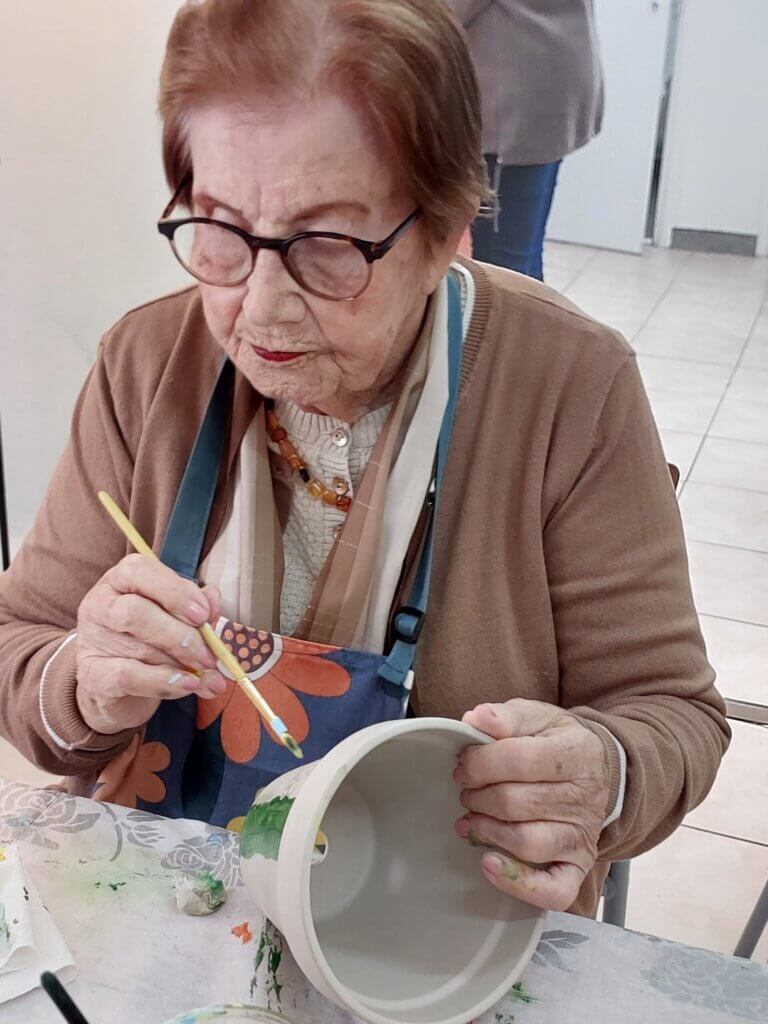

In our art therapy class, Tu BiShvat songs filled the room, creating a joyful and peaceful atmosphere. Together, we reflected with gratitude on the fruit of this land and the winter rains that allow nature to blossom once again.
Each resident received a flowerpot to decorate in the spirit of the holiday, using colours that represent life, light and love.
“I always come when you do something special in this class”, Chaya told our art therapist, Nancy. “Every time you create something beautiful, the atmosphere is so pleasant and respectful. I love coming, even though I cannot see very well.”
At the end of the session, the residents left with a small gift bag of dried fruits and their decorated flowerpot, complete with a colourful plant to bring a bit of Spring into their homes.
Support the special mission of Haifa Home by donating today.